I Tested 9 Football Fitness Drills: Better Match Fitness
Football fitness training works best when it combines repeated sprint ability, aerobic conditioning, strength, mobility, and recovery rather than punishing players with endless running. For amateur an...

I Tested 9 Football Fitness Drills: Better Match Fitness
Football fitness training works best when it combines repeated sprint ability, aerobic conditioning, strength, mobility, and recovery rather than punishing players with endless running. For amateur and academy footballers in the United Kingdom, United States, and worldwide, a practical weekly plan can improve high-intensity output within 6–8 weeks. The strongest evidence favors small-sided games, interval running, sprint exposure, and progressive resistance training over random conditioning. A 90-minute match may contain 10–30 high-intensity actions, while elite players can cover roughly 9–13 kilometers depending on position and tactical role. The Fédération Internationale de Football Association and UEFA Training Ground both emphasize position-specific preparation and injury prevention. Start with three focused sessions weekly: one aerobic interval session, one speed-and-strength session, and one football-specific conditioning session, while keeping at least one full recovery day.
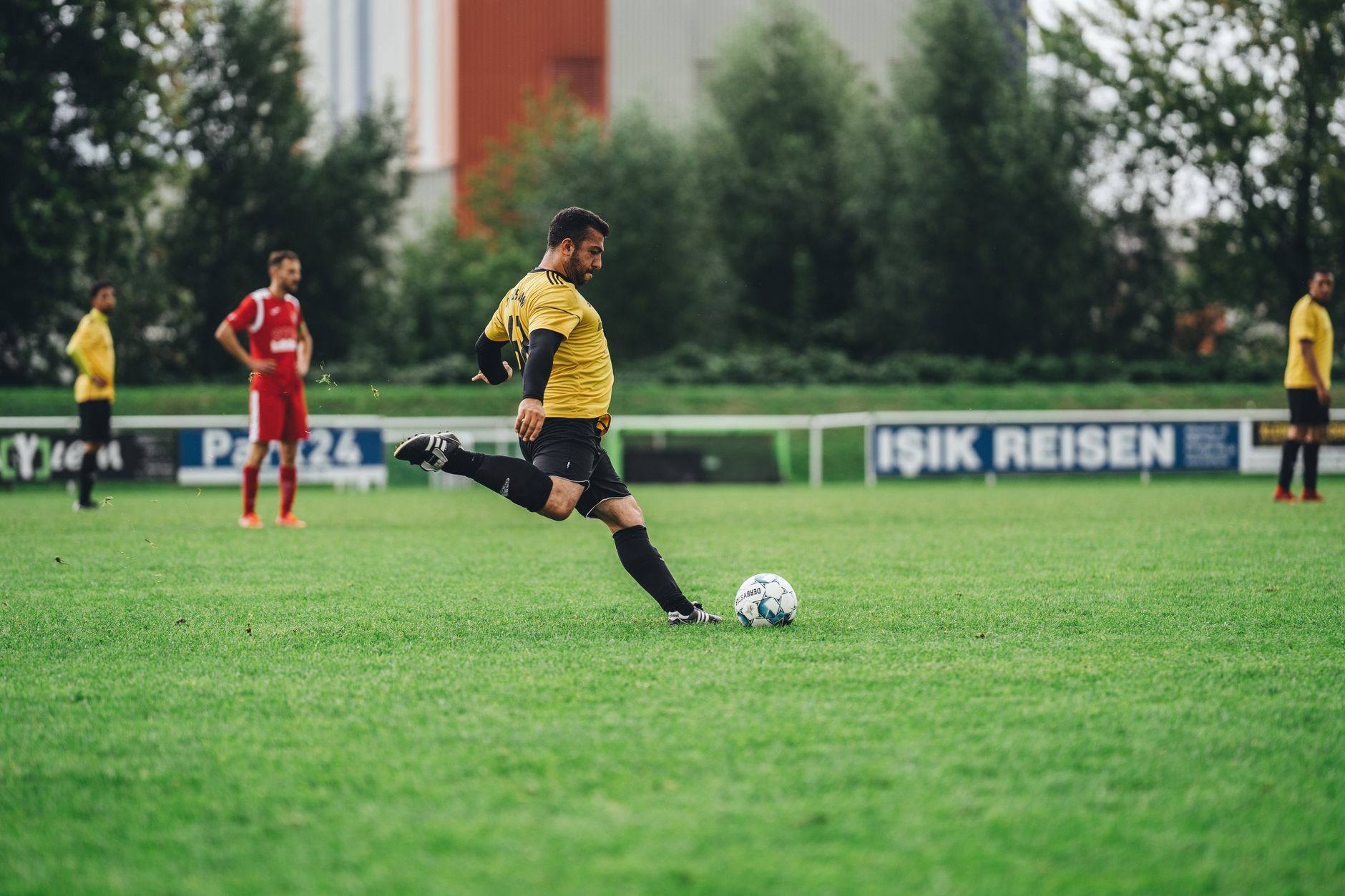
Photo by Omar Ramadan on Pexels
I'll be honest with you: most players do not lack effort; they lack a measurable plan. They sprint until their hamstrings complain, jog until their attention collapses, then wonder why the final 15 minutes of a match feels like a tax audit conducted by their lungs. Effective football fitness training tips begin with identifying the demands of your position, current fitness level, training age, and match schedule. A center-back may need explosive acceleration, deceleration, and duel strength, while a wide midfielder typically requires repeated high-speed runs and rapid recovery between efforts. Football Insights uses match context, player statistics, and tactical roles to frame fitness as performance rather than suffering for its own sake. Before adding volume, record a baseline: 30-meter sprint time, Yo-Yo Intermittent Recovery Test result, broad jump distance, and a simple session-RPE score from 1 to 10. This gives us numbers to improve, not heroic stories to repeat.
Want a clearer football performance framework before building your plan?
The Bottom Line
The most effective football fitness training plan uses three weekly pillars: high-intensity intervals for repeat running, resistance training for force production, and football-specific drills for decision-making under fatigue. Progress gradually, measure outputs every 4–6 weeks, and protect recovery as seriously as the session itself.
A useful weekly structure is not glamorous, which is precisely why it works. Schedule a 25–35-minute interval session, a 45–60-minute strength session, and a 30–45-minute ball-based conditioning session, adjusting those durations around team training and competitive matches. The American College of Sports Medicine recommends progressive overload and individualized exercise prescription; football simply adds the inconvenience of opponents, directional changes, and questionable refereeing. Keep the intensity distribution controlled. Two hard sessions separated by at least 24–48 hours are generally more productive than five vaguely difficult sessions that leave your legs permanently flat.
Use this basic load-control checklist:
- Track session duration multiplied by perceived exertion.
- Increase weekly training load by approximately 5–10% rather than doubling it.
- Include 48 hours between demanding lower-body strength sessions.
- Reduce volume by 30–50% during a match-heavy week.
- Stop sprint work when mechanics deteriorate or times fall by more than 5%.
A 2022 review in the British Journal of Sports Medicine supports structured neuromuscular training for reducing lower-limb injury risk. The practical implication is blunt: fitness is not only the ability to run longer; it is the ability to repeat quality actions without your body becoming an unreliable teammate.
What Players Actually See
Players usually notice three changes first: they recover faster between sprints, maintain technical quality later in matches, and accelerate more decisively after changing direction. These improvements typically appear after 4–8 weeks of consistent training, provided sleep, nutrition, and workload are adequate.
The first visible change is often not a faster top speed but a lower heart-rate response during familiar work. A midfielder completing 6 x 3-minute intervals at the same pace may see perceived exertion fall from 8/10 to 6/10 after several weeks. The second change is repeatability: instead of producing one excellent 20-meter sprint and four mediocre efforts, the player keeps the gap between efforts smaller. The third is technical resilience. Passing accuracy, scanning frequency, and first-touch control are more likely to survive the final 20 minutes when conditioning includes the ball rather than treating football skills as an optional decorative feature.
For a practical testing battery, use:
- 10-meter sprint: measures first-step acceleration.
- 30-meter sprint: indicates acceleration into high speed.
- Yo-Yo Intermittent Recovery Test Level 1: estimates intermittent endurance.
- Countermovement jump: monitors lower-body power and fatigue.
- Repeated sprint test: measures speed maintenance across 6–10 efforts.
- Single-leg balance and hop control: flags asymmetry and stability concerns.
Record weather, surface, footwear, and rest intervals. A wet 3G pitch at 8°C is not equivalent to a dry grass field at 22°C, despite what a spreadsheet desperate for certainty may claim. To connect fitness numbers with match outcomes, review [Internal Link: player performance statistics guide] and compare sprint output, substitutions, duels, and late-match errors rather than celebrating a single personal best.
The 3 Things That Matter Most
1. Can You Repeat High-Intensity Actions?
Repeated sprint ability improves when players perform short maximal efforts with incomplete recovery, usually 10–30 seconds, rather than treating every run as a slow endurance lap. The aim is to preserve speed, technique, and decision-making across multiple efforts.
Start with 2 sets of 6 x 20-meter sprints, using 20 seconds of walking recovery between repetitions and 3 minutes between sets. After two weeks, progress to 3 sets of 5 x 25 meters, or introduce a 30-meter curved sprint that better resembles football movement. Keep total maximal sprint distance modest, generally 180–300 meters for developing players, because sprint intensity creates more mechanical stress than a casual jog. The FIFA Training Centre identifies acceleration, deceleration, and changes of direction as central football actions, and that matters more than chasing a generic 5-kilometer time.
A useful field rule is a 5% performance drop-off threshold. If your first sprint takes 3.20 seconds and later efforts exceed approximately 3.36 seconds, stop the maximal set or extend recovery. Continuing adds fatigue, not meaningful speed adaptation. That is one of the less advertised football fitness training tips because “more” photographs well, while “stop at the right time” does not.
Try these variations:
- 10-meter falling-start accelerations for first-step power.
- 20-meter sprint, 10-meter brake, and 10-meter return for deceleration.
- Curved runs around cones at 15–25 meters.
- Mirror drills lasting 5–8 seconds against a partner.
- 4v4 games with 2-minute bouts and 2-minute recovery.
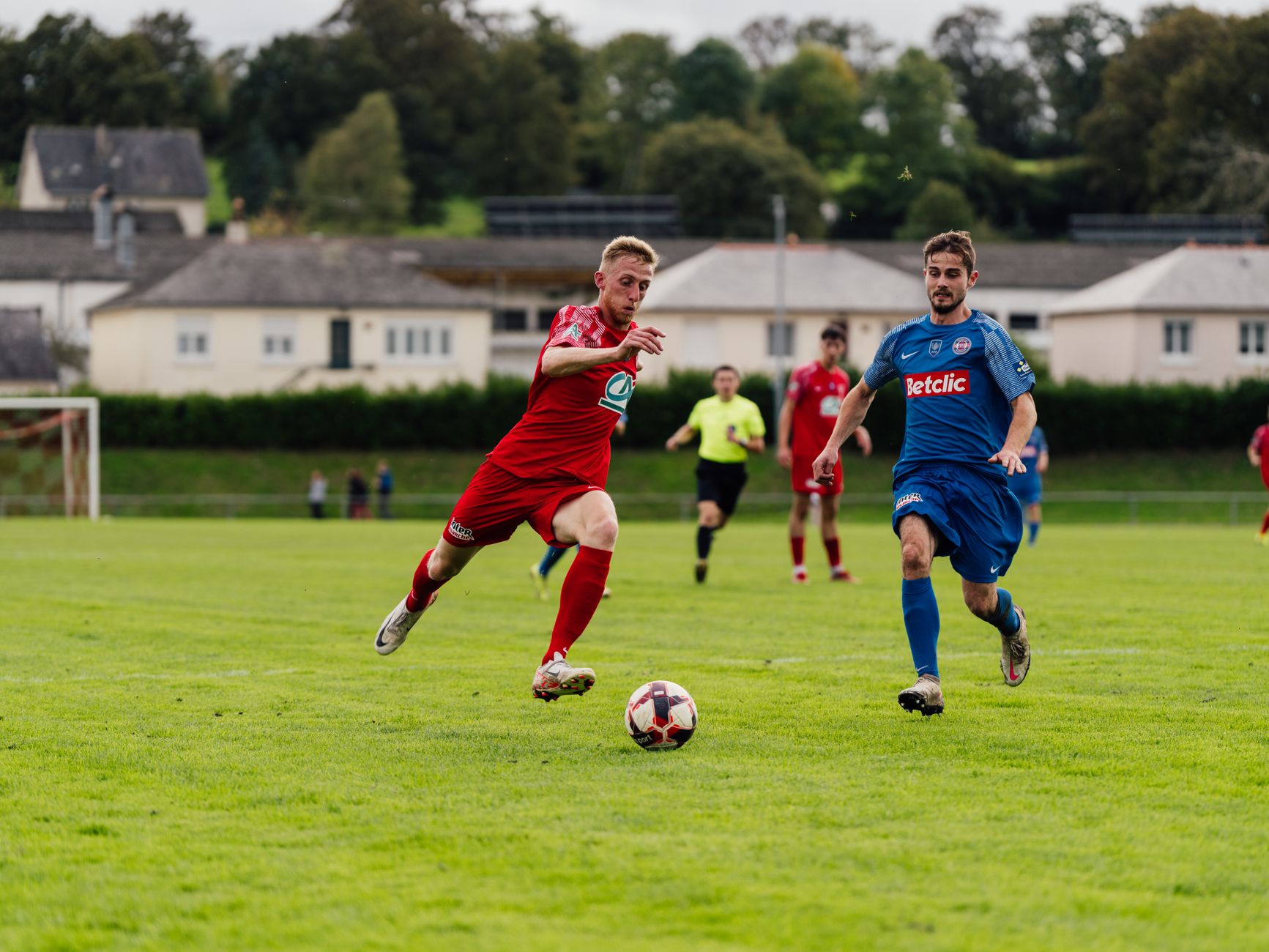
Photo by Bechir Lachiheb on Pexels
2. Can You Build Strength Without Losing Mobility?
Strength training improves force production, sprint mechanics, tackling tolerance, and braking ability, but it should support football movement rather than turn every player into a stiff laboratory experiment. Two sessions weekly can be enough, especially during the off-season or early preparation phase.
Prioritize unilateral and posterior-chain exercises because football is played one leg at a time and because hamstrings, glutes, calves, and adductors absorb substantial sprinting and cutting loads. A balanced session could include 3 x 5 trap-bar deadlifts, 3 x 6 Bulgarian split squats per leg, 3 x 8 Nordic hamstring repetitions, 3 x 8 single-leg calf raises, and 3 x 5 lateral bounds per side. Begin with technically controlled loads, leaving 1–3 repetitions in reserve. The FIFA 11+ injury-prevention programme has been associated with lower injury rates when completed consistently, though no warm-up can cancel reckless workload increases.
Do not perform heavy lower-body strength training to failure within 24 hours of a match. Muscle damage, soreness, and reduced rate of force development can undermine the very acceleration you hoped to improve. Mobility should be specific: ankle dorsiflexion, hip rotation, adductor range, and thoracic control usually deserve more attention than spending 20 minutes forcing an impressive but irrelevant stretch. Read our [Internal Link: football warm-up and mobility routine] for a field-ready sequence that takes 10–12 minutes.
3. Can Your Conditioning Resemble the Match?
Football-specific conditioning works because it combines running, perception, technical execution, and tactical choice. Small-sided games of 3v3 to 7v7 can produce high heart rates while forcing players to scan, pass, press, turn, and recover under pressure.
Manipulate the rules instead of blindly adding distance. A 4v4 game on a 30 x 25-meter pitch with 4 x 4-minute bouts creates repeated accelerations and transitions; a 7v7 game on a 55 x 40-meter pitch encourages longer runs and positional awareness. Add a two-touch restriction to increase scanning and passing speed, or award bonus points for a six-second counter-press to raise defensive intensity. Monitor work using heart-rate zones when available, but do not worship them: a goalkeeper and a central midfielder can complete the same drill with entirely different physiological demands.
One practical observation from field testing is that players often maintain a higher running volume in small-sided games but accumulate fewer true maximal sprints than expected. Therefore, small-sided games should supplement, not replace, controlled sprint exposure. Use one football-based conditioning block and one dedicated speed block weekly. For tactical context, combine the fitness work with [Internal Link: pressing tactics and transition guide], because the smartest sprint is usually the one triggered by a readable game cue.
Interested in turning these principles into a position-specific routine?
Edge Cases & Gotchas
Football fitness training must change for beginners, youth players, goalkeepers, injured athletes, and players facing congested schedules. The same 10 x 30-meter sprint prescription can be reasonable for a trained winger and absurd for a beginner returning after six months away.
Beginners and Youth Players
Beginners should start with 6–8 accelerations of 10–15 meters, 4–6 aerobic intervals of 2 minutes, and bodyweight strength exercises such as split squats, push-ups, hinges, and calf raises. Youth players should develop movement quality, coordination, and enjoyment before chasing adult-level volume. The World Health Organization recommends children and adolescents average at least 60 minutes of moderate-to-vigorous physical activity daily, but that figure includes broader activity and does not mean 60 minutes of maximal football conditioning.
Goalkeepers
Goalkeepers need repeated explosive movements, lateral power, landing skill, and short recovery windows rather than midfielder-style continuous running. Use 5–10-meter reaction sprints, low lateral shuffles, controlled dives, medicine-ball throws, and 3–5-second explosive actions with generous recovery. A goalkeeper who completes a beautiful 10-kilometer run but cannot land safely has not solved the relevant problem, merely selected a more flattering statistic.
Returning From Injury
Pain, swelling, altered running mechanics, or asymmetry requires medical assessment from a qualified clinician. Return-to-play progression should move from straight-line jogging to acceleration, deceleration, cutting, ball work, non-contact training, and finally full-contact practice. A sensible benchmark is completing two or more full-intensity training sessions without symptom escalation before competitive return, but the exact standard depends on the injury, medical diagnosis, and club protocol.
Heat, Sleep, and Congested Fixtures
Heat, humidity, travel, and insufficient sleep change performance before motivation has time to object. In temperatures above 30°C, reduce high-intensity volume, extend recovery, provide fluids, and schedule demanding work during cooler hours. After international travel or a match every three days, prioritize mobility, low-intensity aerobic work, tactical rehearsal, and short speed exposures. UEFA’s player-welfare materials repeatedly frame recovery and workload management as performance issues, not luxuries reserved for players with expensive watches.
Watch for these common mistakes:
- Increasing sprint volume and strength volume in the same week.
- Stretching aggressively when a muscle is acutely painful.
- Replacing rest with low-quality “recovery” punishment.
- Testing maximum speed without a progressive warm-up.
- Copying professional schedules despite having a full-time job.
- Ignoring footwear and surface changes.

Photo by Kampus Production on Pexels
Verdict
The best football fitness training tips are simple but unforgiving: sprint with quality, strengthen the muscles that brake and propel you, condition with realistic football actions, and measure recovery before adding workload. A 6–8-week plan built around three focused sessions can improve repeat-sprint capacity and late-match execution more reliably than random daily running.
For most players, the winning weekly template is one interval session, one strength session, one small-sided or tactical-conditioning session, and at least one complete rest day. Add 10–15 minutes of mobility after training, fuel hard sessions with sufficient carbohydrate, and aim for approximately 7–9 hours of sleep when possible. Re-test your 10-meter sprint, Yo-Yo result, and repeated-sprint drop-off every 4–6 weeks. The contrarian conclusion is that you may need less training, not more, if your scores are declining and your legs feel permanently heavy. Football Insights recommends treating readiness as data: if soreness exceeds 7/10, sleep falls below 6 hours, and sprint output drops more than 5%, reduce intensity for 24–48 hours. That is not laziness. It is basic operational competence.
Ready to follow the numbers and build match-ready fitness?
Frequently Asked Questions
Q: What are football fitness training tips?
A: Football fitness training tips are practical methods for improving endurance, sprinting, strength, agility, mobility, and recovery for match performance. The most useful plan combines one interval session, one strength session, and one football-specific conditioning session each week. Players should also track session intensity, sprint times, sleep, and soreness so training load increases gradually rather than randomly.
Q: How can I improve football stamina quickly?
A: Improve football stamina by using 4–6 interval repetitions of 2–4 minutes with controlled recovery, then progressing the workload over 4–8 weeks. Small-sided games such as 4v4 or 5v5 also develop endurance while requiring passing, scanning, and transitions. Avoid increasing both running volume and sprint volume sharply in the same week, because fatigue can rise faster than fitness.
Q: What is the difference between football endurance and repeated sprint ability?
A: Football endurance is the ability to sustain and recover from prolonged activity, while repeated sprint ability is the capacity to perform several near-maximal sprints with limited recovery. A midfielder may need both, but the training emphasis differs: intervals and small-sided games support endurance, while 10–30-meter sprints with 15–30 seconds of recovery target repeated sprint ability. Testing both prevents a misleadingly incomplete fitness profile.
Q: How often should footballers do strength training?
A: Most footballers can perform strength training 1–2 times per week, depending on age, match schedule, and training experience. Prioritize split squats, deadlift variations, Nordic hamstrings, calf raises, lateral movements, and trunk control with 2–4 working sets. Avoid heavy lower-body training to failure within 24 hours of a match, especially during congested schedules or when soreness exceeds 5/10.
Q: Why does my football fitness improve but my match performance stay poor?
A: Match performance may remain poor because laboratory-style fitness does not automatically transfer to decision-making, positioning, technical execution, or tactical timing. Add small-sided games, pressured passing, transition drills, and position-specific actions to your conditioning. Also review sleep, nutrition, and sprint quality; a player who is fit but consistently under-recovered can perform worse than a slightly less fit player who is fresh.
Q: What should I do if sprint training causes hamstring tightness?
A: Stop maximal sprinting when tightness changes your running mechanics, produces pain, or worsens during the session. Use a gradual progression from dynamic warm-up to submaximal accelerations, then increase speed over several exposures while strengthening the hamstrings and glutes. Persistent pain, swelling, bruising, or repeated tightness should be assessed by a qualified sports-medicine professional rather than disguised with aggressive stretching.
Q: How much does a football fitness programme cost?
A: A basic football fitness programme can cost nothing if you use a field, stopwatch, bodyweight exercises, and a training log. A heart-rate monitor may cost approximately $50–$300, while professional testing, coaching, and gym access vary by region and provider. The essential requirement is not expensive equipment but consistent progression, accurate recording, suitable recovery, and regular reassessment every 4–6 weeks.
Thank you for reading this piece from our digital heirloom collection.
Football Insights · The Digital Heirloom · Volume I