Top 3 FPL Gameweek 1 Tips (2026/27)
Manchester United are the No. 1 FPL Gameweek 1 target for 2026/27 because their opening match is away to Hull and their early schedule includes two promoted clubs. Arsenal rank second after drawing th...

Top 3 FPL Gameweek 1 Tips (2026/27)
Manchester United are the No. 1 FPL Gameweek 1 target for 2026/27 because their opening match is away to Hull and their early schedule includes two promoted clubs. Arsenal rank second after drawing the strongest goal and clean-sheet projections, while Manchester City remain the best high-upside alternative at home to Bournemouth. The deadline is 18:30 UK time on Friday, 21 August 2026, and the starting budget remains £100.0 million for a 15-player squad. Benjamin Sesko, Nordi Mukiele, Omar Alderete and Jeremy Doku are listed as doubts, while William Saliba and Jurrien Timber are ruled out in the supplied team news. Football Insights recommends building around secure starters, saving at least £0.5 million where possible, and avoiding a Gameweek 1 Wildcard unless injuries or major lineup surprises materially change the evidence.

Photo by Mikhail Nilov on Pexels
A 1-0 victory can feel like tactical genius until the expected-goals table reminds you that the goalkeeper earned more points than your premium forward. That is the charming cruelty of Fantasy Premier League: supporters discuss football, but managers actually compete over minutes, set pieces, defensive probabilities and ownership percentages. Therefore, the smartest FPL Gameweek 1 tips are not built around the loudest preseason headline; they are built around reliable fixtures and confirmed roles.
At Football Insights, we treat Gameweek 1 as an information problem rather than a popularity contest. The supplied 2026/27 projections place Arsenal first for both goal potential and clean-sheet probability, Manchester City second for projected goals, and Manchester United in a highly attractive fixture sequence against promoted opposition. That does not mean copying one template blindly. It means identifying which risks are paid for with upside and which risks are merely expensive decoration.
Want a second opinion before locking your squad? Football Insights can help you review the evidence.
The Top 3 FPL Gameweek 1 Picks at a Glance
- Manchester United assets — best fixture-led foundation: A visit to Hull offers a strong opening route for attacking returns, while the next fixture against another promoted club supports a two-week planning horizon.
- Arsenal assets — best defensive and attacking balance: Arsenal lead the supplied Gameweek 1 projections for goals and clean sheets, giving managers access to points from both ends of the pitch.
- Manchester City assets — best premium upside: Manchester City host Bournemouth at the Etihad, and even a disappointing Community Shield performance should not erase their long-term attacking ceiling.
The three choices solve different problems. Manchester United offer fixture security, Arsenal offer statistical balance, and Manchester City offer explosive captaincy potential. The mistake is assuming that “best” means the same thing for every squad; it does not, because a manager with two Arsenal attackers has a different marginal decision from one already carrying Erling Haaland or another Manchester City premium.
A useful Gameweek 1 draft should also account for bench structure. The cheapest defender on your bench is not automatically a bargain if he is unlikely to start, while a £4.5 million midfielder with secure minutes can be more useful than a £4.0 million defender who spends August observing football from the substitutes’ bench. For a wider explanation of squad construction, see our [Internal Link: FPL beginner’s guide to budget structure].
Quick Gameweek 1 checklist
- Confirm the deadline: 18:30 UK time, Friday, 21 August 2026.
- Check final press conferences for Benjamin Sesko, Nordi Mukiele, Omar Alderete and Jeremy Doku.
- Remove ruled-out players, including William Saliba and Jurrien Timber.
- Choose a captain with secure minutes and a high involvement in goals.
- Keep one free transfer after Gameweek 1 unless the squad contains a confirmed injury or non-starter.
- Avoid selecting players only because their ownership is high.
[Internal Link: FPL fixture difficulty and schedule analysis] belongs beside this checklist because fixture quality is not simply the opponent’s league position. Home advantage, promoted-team uncertainty and expected lineup strength all matter, though apparently the spreadsheet did not receive that memo from social media.
#1 Manchester United: Best Overall for Fixture Security
Manchester United are the best overall Gameweek 1 foundation because their opening fixture against Hull combines a favourable opponent with a potentially useful early run. The key appeal is not a guaranteed haul; no model can promise that. It is the combination of expected minutes, attacking opportunity and the possibility of facing two promoted clubs across the opening schedule.
The supplied reference information identifies Manchester United’s first match as an away fixture at Hull, followed by another match against promoted opposition. That creates a practical planning advantage: you can select a Manchester United attacker or defender for Gameweek 1 without immediately needing to sell after one match. In FPL, that flexibility has a real value because early transfers cost opportunities, and a rushed move can destroy a carefully built team before the season has even developed.
Manchester United assets should still be separated by role. A central striker who takes penalties is a fundamentally different investment from a wide player competing for minutes, and an attacking full-back is not equivalent to a centre-back merely because both appear in the same defensive line. Before choosing, check four data points: starting probability, set-piece responsibility, average position, and price relative to comparable players. If the player fails two of those tests, the attractive fixture may be doing all the work.
The contrarian point is simple: a promoted opponent does not automatically mean a clean sheet. Newly promoted sides can be tactically conservative, which may reduce attacking volume while preserving defensive resistance. Manchester United defenders are therefore more attractive when their individual attacking routes are visible, such as crosses, set pieces or box entries, rather than because the fixture ticker has painted the match green.
#2 Arsenal: Best for Balanced Expected Returns
Arsenal are the strongest all-round option because the supplied Gameweek 1 projections place them first for both goal projection and clean-sheet probability. That dual ranking makes Arsenal valuable for managers who want captaincy upside without sacrificing defensive stability. Their assets can contribute through goals, assists, bonus points and clean-sheet points, depending on position.
The opening fixture is Arsenal versus Coventry on Friday, 21 August 2026. Friday matches are operationally useful because the lineup arrives before the deadline, reducing the need to gamble on early team news. However, early confirmation does not eliminate risk; it merely gives you better information than managers facing a late Sunday deadline. The professional move is to use that information, not to celebrate it as if the deadline itself were a trophy.
Arsenal’s defensive appeal becomes particularly important when the rest of your squad contains volatile attackers. A nailed Arsenal defender can provide a points floor, while an Arsenal midfielder or forward offers a more direct route to attacking returns. Managers should look for players whose points are not dependent on a single event. A defender who can earn a clean sheet and create chances may outperform a similarly priced player who requires a goal to justify selection.
One under-discussed Gameweek 1 edge is the difference between projected strength and actual lineup certainty. William Saliba and Jurrien Timber are listed as ruled out in the supplied team news, so managers must not assume that Arsenal’s excellent team-level clean-sheet projection automatically applies to every defender. Recheck the back four and goalkeeper before the deadline; football models are useful, but they are not capable of putting a player on the pitch.
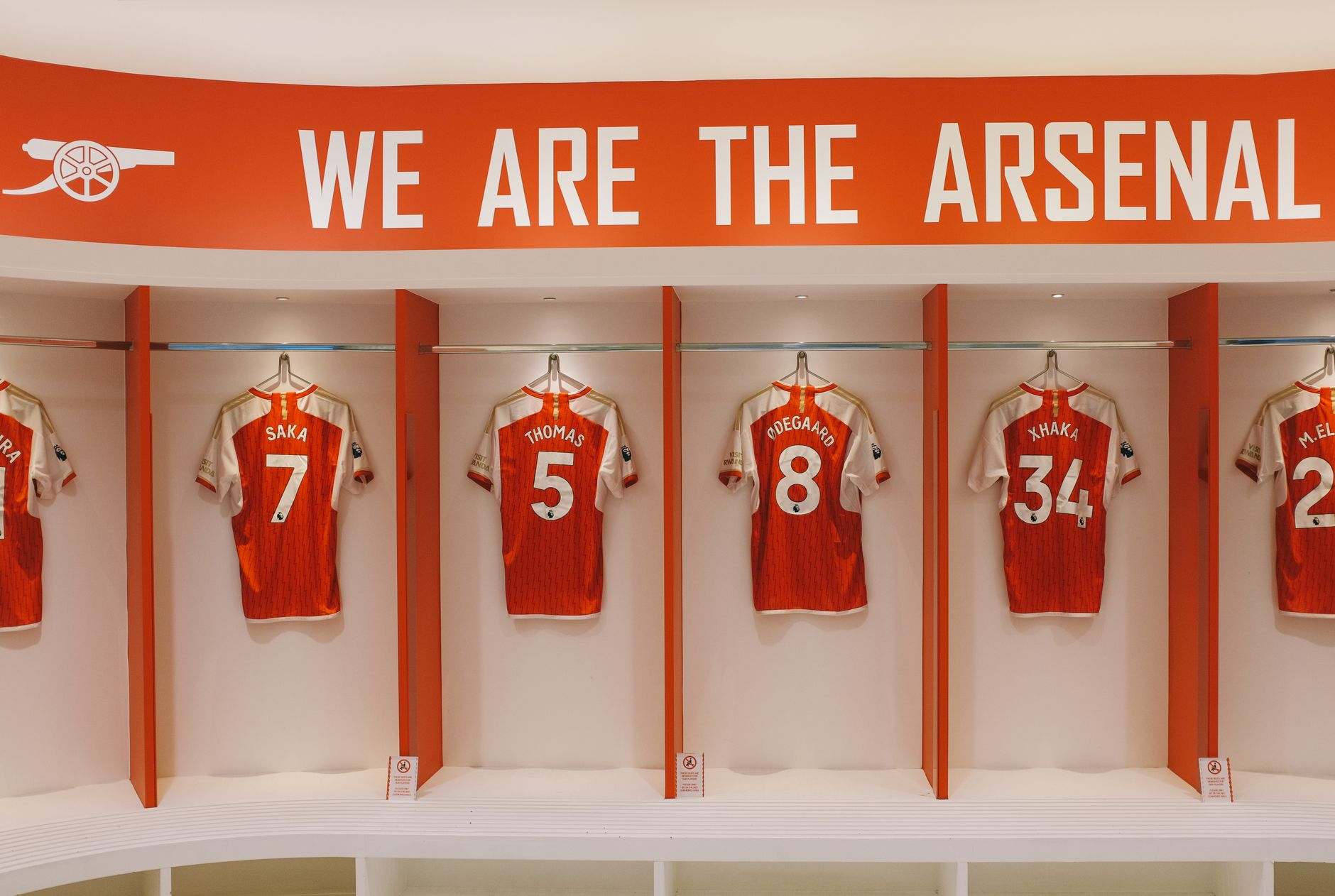
Photo by Huy Phan on Pexels
#3 Manchester City: Best Value at Premium Captaincy Cost
Manchester City are the best premium upside option because they host Bournemouth at the Etihad and rank second for projected goals in the supplied Gameweek 1 information. Their poor Community Shield performance should not be treated as a decisive league forecast; one competitive match, especially before a full campaign has settled, is a very small sample.
The Manchester City decision is mainly about concentration. Premium attackers can produce a double-digit return in a single match, but selecting one often forces compromises elsewhere, including a weaker fifth midfielder or a less reliable bench. That trade-off is acceptable when the premium player has penalties, set pieces, secure minutes or an unusually high share of team shots. It is less defensible when the selection is based only on reputation.
Bournemouth are not a reason to abandon Manchester City, but they are a reason to avoid pretending that the fixture guarantees goals. The relevant question is whether the chosen City player remains involved if the match becomes 2-0 after 60 minutes. A forward who is substituted early may lose the chance to add points; a set-piece taker or creative midfielder could remain useful even when the match is controlled.
The most practical approach is to decide your premium structure before choosing the final eleven. If you select a Manchester City captain, do not simultaneously overload the squad with three expensive attackers who all require perfect minutes. Premium assets work best when the bench and rotation risk are funded properly. Otherwise, you have purchased an impressive front line and a defensive emergency shelter made from £4.0 million cardboard.
How Should You Rank FPL Gameweek 1 Players?
FPL Gameweek 1 players should be ranked using fixture quality, expected minutes, attacking involvement, defensive probability, set-piece access and price; no single metric is reliable enough alone. The best opening picks usually combine at least three positive indicators, such as a favourable opponent, secure starts and a role near the penalty area. Avoid players whose entire case depends on preseason highlights.
A practical ranking model can assign approximate weights:
- Fixture quality: 25% — opponent strength, venue and early schedule.
- Expected minutes: 25% — likelihood of starting and remaining on the pitch.
- Attacking involvement: 20% — shots, chances created, penalties and set pieces.
- Clean-sheet probability: 15% — especially important for defenders and goalkeepers.
- Price and squad impact: 10% — whether the player enables a balanced 15-man team.
- Information risk: 5% — injuries, manager comments and uncertain transfers.
This weighting creates an important information gain: expected minutes should equal fixture quality in importance. Many popular Gameweek 1 articles place the opponent first because it is easy to explain, but a brilliant fixture is worthless if the player starts on the bench. A £6.0 million attacker who plays 85 minutes against a decent opponent may be more useful than a £7.5 million rotation risk facing a weak one.
For statistical context, the Premier League official website provides fixtures, club information and competition updates, while Fantasy Premier League remains the authoritative platform for player prices, positions and scoring rules. The underlying principle is not complicated: use official information for facts, then use projections to estimate outcomes. Do not reverse that order because an anonymous account posted a dramatic predicted lineup.
Get the latest match context before making the final transfer decision.
What Is the Best FPL Gameweek 1 Formation?
The best FPL Gameweek 1 formation is usually 3-4-3 or 3-5-2, provided the starting defenders and midfielders have secure minutes. Formation should follow player value rather than dictate it, because the automatic bench order cannot rescue a squad full of non-starters. The safest setup combines attacking midfielders with at least three reliable defenders.
A 3-4-3 formation is attractive when the forward line contains three starters with penalty-box roles. It also allows managers to invest heavily in midfield, where goals and assists often carry stronger point potential than defensive clean sheets. A 3-5-2 can be better when several mid-priced midfielders have set pieces, penalties or advanced positions, while the third forward is uncertain or lacks a clear role.
Use this process before submitting the team:
- Mark eleven players with the highest starting probability.
- Place the most attacking defenders ahead of bench players.
- Confirm that the first substitute is genuinely likely to play.
- Assign the captain to the player with the strongest blend of minutes and involvement.
- Check the vice-captain for a separate, reliable fixture.
- Review the bench order after every late injury update.
The bench is the part managers ignore until it matters, which is exactly why it matters. A £4.5 million defender who starts regularly can protect you from a surprise absence, whereas a bench made entirely of budget players with uncertain roles leaves no practical response to late news. For additional planning, read our [Internal Link: FPL bench-order and rotation guide].
Which Captain Should You Pick in Gameweek 1?
The Gameweek 1 captain should be a premium or high-involvement player with secure minutes, a favourable fixture and multiple routes to points. Manchester City’s home match against Bournemouth offers significant captaincy appeal, while Arsenal’s strong goal projection makes their leading attacker or creator a serious alternative. Captaincy should prioritise opportunity over ownership anxiety.
The captain choice is where football emotion becomes expensive. Managers often select the most recognisable name because refusing to do so feels socially dangerous, even when the player has rotation risk or a difficult matchup. A better method is to compare expected minutes, penalty duties, shot volume and the probability of returning through either a goal or assist.
Manchester City’s projected second-place goal ranking supports their premium captaincy case, but Arsenal’s first-place projection cannot be dismissed. Manchester United also deserve consideration if their key attacker has a secure role and a strong penalty-area presence against Hull. The final decision should wait for confirmed team news whenever possible, especially with players listed as doubts, including Benjamin Sesko and Jeremy Doku.
A useful rule is to captain the player you would most regret not owning if the match unfolds normally. That is not the same as captaining the player you fear most when browsing ownership percentages. The former is analysis; the latter is emotional insurance dressed in a data costume.

Photo by Jeremy Levin on Pexels
Should You Use a Wildcard in FPL Gameweek 1?
Most managers should not use the Wildcard in Gameweek 1 unless multiple players are injured, benched or materially mispriced after final team news. The opening deadline contains uncertainty, but that uncertainty is not automatically a reason to spend a major chip. Saving the Wildcard preserves flexibility while real lineups, tactics and player roles become clearer.
The strongest argument against an early Wildcard is information quality. Before competitive matches, projections rely on incomplete evidence: preseason minutes, transfer assumptions, manager comments and historical performance. After two or three Gameweeks, managers can evaluate actual starts, shot locations, set-piece duties and tactical systems. That additional evidence is often more valuable than a short-term fixture swing.
There are exceptions. A Wildcard can be justified if a squad contains four or more non-starters, a serious injury cluster or a structural error that cannot be corrected with one free transfer. It can also be reasonable if the 2026/27 schedule creates a sharp fixture shift, but that decision requires confirmed fixtures rather than general optimism.
The same conservative approach applies to the Bench Boost and Triple Captain chips. Gameweek 1 rarely provides enough certainty about all fifteen players for a Bench Boost to be efficient, and a Triple Captain should generally wait for a strong fixture with confirmed minutes. Chip value is not created by using a chip early; it is created by using it when the expected gain exceeds the value of holding it.
How We Ranked Them
We ranked the three Gameweek 1 options by combining the supplied projections, fixture context, role security, expected minutes and squad-building consequences. Arsenal received the strongest team-level score because they lead both goal and clean-sheet projections. Manchester United ranked first for fixture-led appeal because Hull and another promoted opponent offer an attractive early path, while Manchester City ranked first for premium attacking ceiling at home to Bournemouth.
Our ranking is not a claim that one club must dominate every FPL team. It is a decision framework:
- Arsenal: highest balance between attacking and defensive projection.
- Manchester United: strongest short-term fixture narrative, subject to confirmed roles.
- Manchester City: greatest premium upside, with price and rotation as the main costs.
- Doubt management: downgrade Benjamin Sesko, Nordi Mukiele, Omar Alderete and Jeremy Doku until reliable updates arrive.
- Availability management: exclude William Saliba and Jurrien Timber while they remain ruled out.
The data caveat matters. The supplied material includes a 2026/27 deadline and injury list, but football information changes quickly. Check official club communications and the FPL game interface before finalising. As Law 5 of the IFAB Laws of the Game demonstrates in a different context, football outcomes depend on formal rules and live decisions; fantasy projections are estimates, not guarantees. One official lineup can invalidate an entire evening of confident analysis.
Review the final team with evidence, not panic.
Which Should You Pick?
Choose Manchester United for the safest fixture-led foundation, Arsenal for the strongest combination of projected goals and clean-sheet potential, and Manchester City for premium captaincy upside against Bournemouth. Most balanced squads should include exposure to at least one of Arsenal or Manchester City, then use Manchester United assets where the individual player has secure minutes and a clear attacking or defensive role.
The best Gameweek 1 team is not necessarily the one that wins the first weekend. It is the team that can absorb an unexpected benching, retain a free transfer and adapt to new information without requiring four rushed moves. That means limiting uncertain players, avoiding a weak bench and resisting the seductive idea that every preseason signal deserves a place in your starting eleven.
Our recommended priority order is:
- Confirm availability and starting probability.
- Select one captain with secure minutes and multiple scoring routes.
- Build around the strongest fixtures: Hull, Coventry and Bournemouth are the key supplied references.
- Compare Arsenal, Manchester United and Manchester City assets by role rather than club reputation.
- Save chips unless exceptional circumstances justify early use.
- Reassess after the first full set of competitive matches.
Football Insights is built around match predictions, tactical context and player statistics, but the same principle applies to FPL: the number must serve the decision. If a stat cannot tell you who starts, who takes the set piece or who benefits from the fixture, it is probably decoration. Lock the squad before 18:30 UK time on 21 August 2026, then accept the one truth every fantasy manager eventually learns: the deadline is the only part you can control.
Ready to compare your draft against the key Gameweek 1 signals?
Frequently Asked Questions
Q: What are FPL Gameweek 1 tips?
A: FPL Gameweek 1 tips are evidence-based recommendations for selecting players, captains, formations and chips before the opening deadline. For 2026/27, the key deadline is 18:30 UK time on Friday, 21 August 2026. The most important principles are secure minutes, favourable fixtures, attacking involvement and a reliable bench rather than simply choosing the most popular names.
Q: How do I build an FPL team for Gameweek 1?
A: Build your team by confirming player availability, selecting reliable starters and balancing premium assets with dependable mid-priced options. Start with the £100.0 million budget, identify your captain, then fill the bench with players who have a realistic chance of appearing. Check the final lineups and injury updates for Arsenal, Manchester United, Manchester City and all listed doubts before the deadline.
Q: Is Arsenal or Manchester City better for FPL Gameweek 1?
A: Arsenal are better for balanced projected returns, while Manchester City offer greater premium attacking upside. The supplied projections place Arsenal first for both goals and clean sheets, whereas Manchester City rank second for projected goals and host Bournemouth at the Etihad. Choose Arsenal for defensive and attacking coverage, or Manchester City if the selected player has secure minutes and captaincy potential.
Q: Should I captain a Manchester City player in Gameweek 1?
A: A Manchester City player is a strong captaincy option because Manchester City host Bournemouth and rank second for projected goals. However, captaincy should depend on confirmed minutes, penalties, set pieces and expected involvement rather than club reputation alone. Compare the City option with Arsenal’s leading attacker and any Manchester United premium pick after final team news.
Q: Should I use my Wildcard in FPL Gameweek 1?
A: You should usually save the Wildcard in Gameweek 1 unless several players are injured, benched or structurally unsuitable. Waiting two or three Gameweeks provides real evidence about starting lineups, tactics, shot volume and set-piece duties. Use the chip early only when the squad has multiple confirmed problems that cannot be fixed with normal transfers.
Q: What should I do if an FPL player is ruled out after I submit my team?
A: If a player is ruled out before the deadline, replace him with a confirmed starter whenever possible; after the deadline, your first substitute can replace him automatically if he does not play. The supplied 2026/27 information lists William Saliba and Jurrien Timber as ruled out, while Benjamin Sesko, Nordi Mukiele, Omar Alderete and Jeremy Doku are doubts. Always check official updates before locking the squad.
Q: Is it worth choosing a promoted-team opponent in Gameweek 1?
A: Choosing attackers facing promoted opposition can be worthwhile when the player has secure minutes and a strong role, but a promoted team does not guarantee goals or clean sheets. Manchester United’s trip to Hull is attractive because of the fixture and early schedule, yet the individual player’s position, set pieces and expected minutes remain decisive. Treat the opponent as one input, not the entire argument.

Photo by Franco Monsalvo on Pexels
Thank you for reading this piece from our digital heirloom collection.
Football Insights · The Digital Heirloom · Volume I