Ball Mastery vs Fitness: Best Football Drills
The best football training drills combine ball mastery, passing, finishing, speed, agility, and match-specific decision-making rather than repeating isolated touches forever. For youth and adult playe...

Ball Mastery vs Fitness: Best Football Drills
The best football training drills combine ball mastery, passing, finishing, speed, agility, and match-specific decision-making rather than repeating isolated touches forever. For youth and adult players in the United States, United Kingdom, and Europe, a balanced 30-minute session can include 5 minutes of dynamic movement, 10 minutes of technical work, 10 minutes of pressure-based practice, and 5 minutes of finishing or conditioning. The most useful drills are the 10-touch control circuit, four-corner passing, 1v1 change-of-direction, wall passing, and small-sided games. FIFA training guidance emphasizes technique, awareness, and realistic movement, while research published in the Journal of Sports Sciences links small-sided games with improvements in technical actions and high-intensity running. Football Insights recommends training at least 3 times weekly, recording successful passes and weak-foot touches, and increasing intensity only when execution remains above 80%.
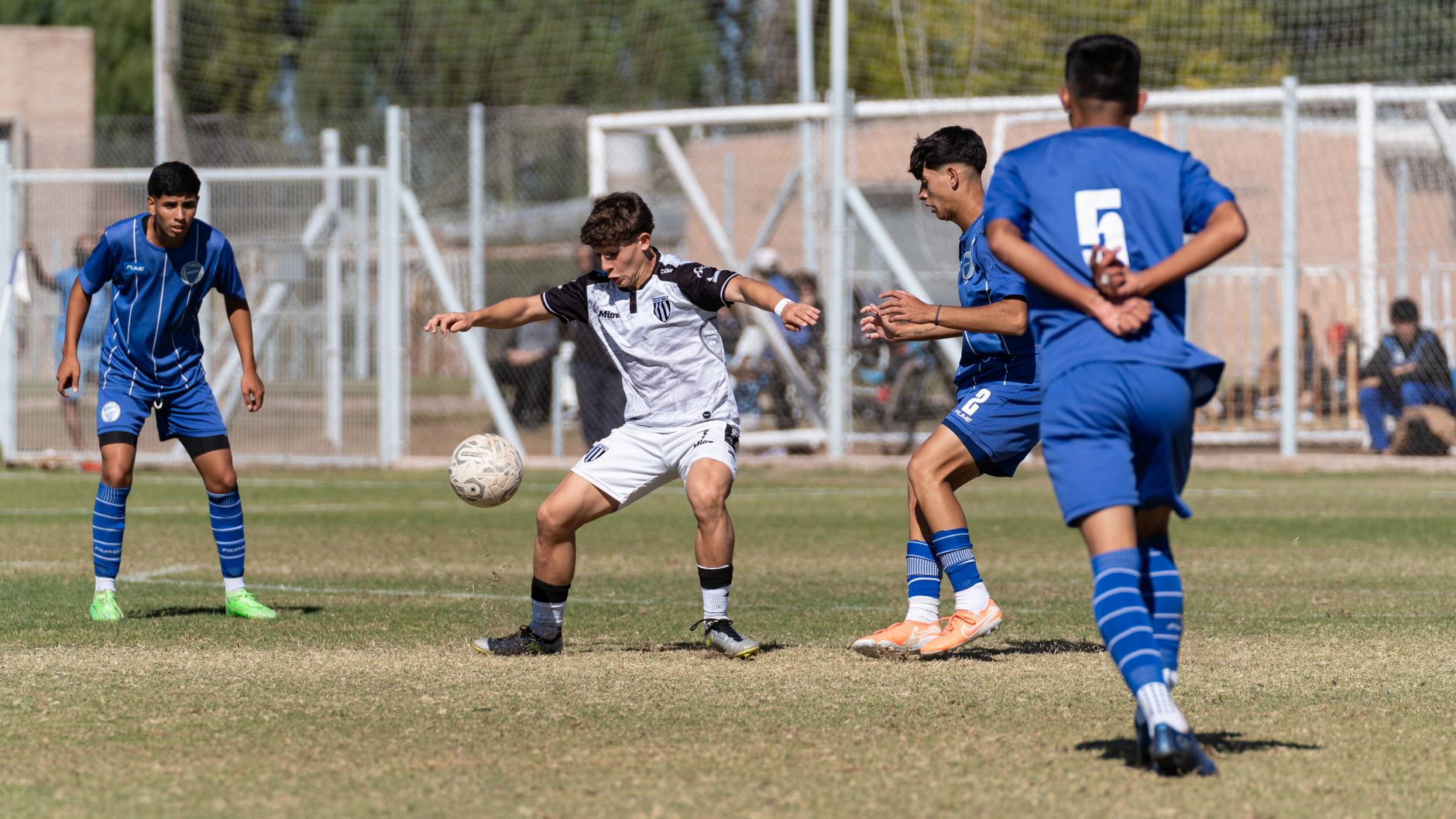
Photo by Franco Monsalvo on Pexels
I'll be honest with you: most “best football drills” lists are just cones wearing a disguise. A player can complete 500 stationary touches and still panic when a defender arrives at speed. The drills below are designed to transfer into actual matches, where space disappears, teammates move, and the ball rarely behaves politely. Football Insights focuses on practical World Cup analysis, player statistics, and tactical detail, so this guide treats training like a measurable process rather than a motivational poster. Use the comparison first, then build the session that matches your position, age, fitness, and current weakness.
Want a clearer training framework before you begin?
The Quick Comparison
| Training goal | Best drill | Main equipment | Recommended dose | Match benefit |
|---|---|---|---|---|
| First touch | 10-touch control circuit | Ball, cones | 3 rounds of 60 seconds | Cleaner receiving under pressure |
| Passing | Four-corner passing | 4 cones, 2 balls | 4 sets of 90 seconds | Faster circulation and support angles |
| Ball control | Wall passing | Wall or rebounder | 50 passes per foot | Better rhythm and weak-foot confidence |
| Dribbling | 1v1 gate attack | 4–6 cones | 6 repetitions per side | Improved acceleration and deception |
| Finishing | Move-and-shoot circuit | Goal, balls, cones | 12–20 shots | Faster release near the box |
| Fitness | Small-sided game | Bibs, marked area | 3 x 4 minutes | Repeated sprinting and decisions |
This table exposes an inconvenient truth: no single drill develops every football quality. A wall-passing routine can improve timing but cannot fully reproduce a defender’s pressure; sprint intervals can raise intensity but do not teach a player when to release the ball. The FIFA Training Centre repeatedly presents practice through realistic game situations, and that principle should govern your choices. For measurable progress, track three numbers after every session: completed passes, successful first touches, and shots on target. If those figures do not improve after 4 weeks, changing the drill may be less useful than reducing speed and fixing technique.
Round 1: How Do Ball-Control Drills Build a Better First Touch?
Ball-control drills improve a first touch by forcing the player to receive, cushion, move, and protect the ball in different directions. The most effective sequence uses both feet, multiple surfaces of the foot, and a decision immediately after control. Ten minutes of purposeful work, performed 3–4 times per week, is usually more valuable than a single exhausting session.
Begin with the 10-touch control circuit in a 5-by-5-yard square. Perform inside-outside touches with the right foot, repeat with the left, then add sole rolls, toe taps, V-pulls, and lateral touches. Complete 30 seconds of each pattern, rest for 20 seconds, and repeat for 3 rounds. Keep the ball within one step of your body during the first round; in the second, scan over your shoulder before every change of direction; in the third, accelerate out of the square after the final touch. This is where the drill stops being decorative footwork and starts resembling football.
The second exercise is the receive-and-exit drill. Stand 8–10 yards from a partner or wall, pass firmly, receive across your body, and take the next touch into a new 45-degree lane. Complete 20 repetitions with the right foot and 20 with the left. A useful target is 36 clean exits from 40 attempts, or 90%; below that level, reduce the passing speed rather than pretending chaos is automatically development. UEFA’s technical development resources stress the relationship between technique, perception, and decision-making, which is why the exit direction matters as much as the initial touch.
Try this progression if the ball keeps escaping into the weeds:
- Start with a stationary ball and slow passes.
- Add a passive defender after 10 successful repetitions.
- Allow the defender to intercept only after the receiver’s first touch.
- Finish with a 3v1 or 4v2 possession game.
- Record weak-foot success separately instead of hiding it inside one total.
A practical observation from repeated training sessions is that many players lose control not because their touch is too heavy, but because their body is closed before the ball arrives. Open the hips, check the shoulder early, and decide the next action before contact. That small adjustment often reduces the second touch from 2 yards to less than 1 yard, which is the difference between keeping possession and inviting a tackle. For more technical detail, see our [Internal Link: ball control progression guide].
Round 2: Which Passing Drills Improve Speed and Accuracy?
The best passing drills improve accuracy and speed together by adding movement, scanning, pressure, and a clear target zone. Four-corner passing is the strongest starting point because it trains body shape, support angles, one-touch play, and directional receiving within the same 12–15 minute block.
Set four cones in a 10-by-10-yard square with one player at each corner and at least two footballs in circulation. Pass clockwise, follow the pass, and receive with the far foot so the first touch points toward the next corner. After 90 seconds, reverse direction; after another 90 seconds, add a central player who checks away before receiving. Complete 4 sets, resting 45 seconds between sets. The objective is not merely to pass quickly. The real target is 80% or more accurate passes while maintaining movement after release.
Wall passing offers a brutally honest variation because the wall does not praise you for almost making it. Stand 5 yards away for close passing and 8–12 yards away for longer passes. Complete 50 right-foot passes, 50 left-foot passes, then 30 alternating passes with a two-touch limit. Count a repetition only when the return arrives within one step of your preferred receiving foot. If 15 or more passes require a recovery touch, shorten the distance by 1–2 yards and rebuild control.
“Football is a team game, and the team that works best together wins,” is the basic principle reflected in FIFA’s Laws and coaching materials, although the glamorous version of training often forgets the team entirely. The International Football Association Board Laws of the Game define the match environment; your practice should prepare you for its movement, pressure, and shared space, not just produce pretty cone patterns.
At approximately 1/3 intensity, introduce a decision rule:
- One-touch if the passing lane is open.
- Two-touch if the ball arrives behind the body.
- Bounce pass if a defender blocks the forward lane.
- Switch play after 3 consecutive passes on one side.
- Restart the count after a poor pass or stationary reception.
Want to turn clean passing into useful match habits?
Round 3: How Can Speed, Agility, and 1v1 Drills Transfer to Matches?
Speed and agility drills transfer to matches when they include a ball, an opponent, or a decision about direction. Pure ladder work may improve foot-placement rhythm, but 1v1 gate attacks and reactive sprints better reproduce the acceleration, braking, and deception required in football. Use 6–10 high-quality repetitions with 30–60 seconds of recovery rather than turning every sprint into exhausted survival.
Create two 2-yard gates 8 yards apart, with the attacker starting in the middle and a defender 3 yards away. The attacker receives a pass, uses a first touch toward either gate, and tries to dribble through it before the defender closes the route. Award 1 point for beating the defender and 2 points for exiting with control within 2 seconds. Rotate roles after 6 attempts. A strong player should aim for at least 50% successful exits against an active defender; if the rate falls below 30%, widen the gates or reduce the starting distance.
For acceleration, place cones at 5, 10, and 15 yards. Sprint to the first cone, decelerate under control, backpedal to the start, then repeat to 10 and 15 yards. Complete 2 sets with 90 seconds between them. Add the football only after the player can stop without extra steps or a visible loss of balance. This progression matters because hamstring and groin problems rarely care how impressive the first repetition looked. The American College of Sports Medicine recommends gradual progression and recovery as central elements of safe physical preparation.
The most valuable agility variation is reactive rather than pre-planned. A coach or partner points left, right, or forward after the attacker’s first touch; the player must respond within roughly 1 second. Use 8 repetitions, then switch roles. This drill trains perception and action coupling, a quality that fixed ladders cannot manufacture. It also exposes players who move quickly in a straight line but take too long to decide, a fairly expensive weakness once a competitive defender notices it.
Round 4: What Finishing Drills Create Better Decisions Near Goal?
Finishing drills create better decisions when players must choose between placement, power, a first-time shot, or an extra touch before striking. A useful 20-minute block includes 12–20 shots from varied angles, with at least one-third taken using the weaker foot. The aim is not to smash every ball; it is to select the correct finish under realistic time pressure.
Start the move-and-shoot circuit at the edge of the penalty area. The attacker checks away from a cone, receives a pass, takes one touch across the body, and shoots within 3 seconds. Alternate near-post and far-post targets for 12 attempts, then repeat from the opposite side. Record goals, shots on target, and shots that miss the frame entirely. A player who scores 5 of 12 but places 10 on target may be developing more usefully than a player who scores 6 while sending 8 efforts into the surrounding parking area.
Add a second player for the cutback decision drill. The wide player carries the ball toward the byline while the striker chooses between a near-post run, penalty-spot movement, or delayed far-post arrival. Deliver 3 balls to each zone, then change roles. Defenders should begin passively, become semi-active after 6 repetitions, and defend normally during the final 6. This creates a simple measurement: did the attacker read the ball carrier’s body position before running, or did they sprint first and complain later?
For midfielders and defenders, include edge-of-box finishing after a clearance. The player starts 20–25 yards from goal, receives a partially cleared ball, and has 2 touches maximum before shooting. Complete 10 attempts from varied rebounds. This develops second-ball awareness, a feature visible in major competitions such as the FIFA World Cup 2026, where compact defensive blocks often create scoring opportunities outside the penalty area rather than through elaborate dribbles.
A practical finishing checklist is simple:
- Head up before the final touch.
- Plant foot beside the ball, not behind it.
- Choose the target before the swing.
- Keep the first touch away from pressure.
- Recover immediately after the shot.
[Internal Link: finishing drills for strikers and midfielders] explains how to adapt these exercises by position. Meanwhile, players who repeatedly miss high should lower the chest over the ball and reduce the backswing; the ball is usually following the mechanics with irritating accuracy.
Round 5: How Should You Combine Football Fitness and Small-Sided Games?
Football fitness should be combined with technical actions because matches require repeated sprinting, braking, passing, and decision-making while tired. A 3v3 or 4v4 small-sided game on a 25-by-20-yard pitch, played in 3 blocks of 4 minutes with 2-minute recovery, can provide a practical blend of aerobic and anaerobic work without separating football from fitness.
Use 4v4 plus goalkeepers for a balanced session, or 3v3 without goalkeepers when you want more transitions. Award a bonus point for scoring within 8 seconds of winning possession, which encourages immediate support and forward intent. Limit each player to 2 touches for one block, then remove the restriction so players must recognize when speed is useful and when it is merely panic wearing boots. Monitor intensity using a 1–10 effort scale; most competitive blocks should feel like 7–9, while technical recovery work should remain closer to 5–6.
After 4 minutes, players should not simply collapse beside the cones and negotiate with oxygen. Ask them to record three observations: number of high-intensity runs, successful passes under pressure, and recoveries after losing possession. A heart-rate monitor can add useful detail, but not every amateur player needs laboratory equipment; repeatable observations often reveal more than one dramatic number. In a 6-week plan, increase only one variable each week: pitch size, block duration, player number, or touch restriction.
A useful weekly structure looks like this:
- Monday: ball control, wall passing, and mobility.
- Wednesday: passing under pressure, 1v1 attacks, and short sprints.
- Friday: finishing, small-sided games, and recovery runs.
- Saturday or Sunday: match play or tactical training.
- One full rest day with no high-intensity football.
This approach is deliberately less glamorous than daily punishment. The World Health Organization advises regular physical activity while emphasizing gradual, sustainable participation, and football training should follow the same logic. If your sprint quality drops by more than 10% across repetitions, end the speed block; fatigue has already changed the exercise into a slower and technically uglier activity.
Ready to build a repeatable weekly plan rather than improvise every session?
The Final Score & Who Should Pick What
The best football training drills depend on the weakness you can measure, not the drill that looks most professional on social media. Choose ball-control circuits if your first touch travels more than 1 yard under pressure; choose passing patterns if your accuracy falls below 80%; choose 1v1 gates if you struggle to beat defenders; choose finishing circuits if fewer than 60% of attempts reach the target; and choose small-sided games if technique disappears whenever fatigue arrives.
For most players, the strongest 30-minute session is:
- 5 minutes of dynamic movement and mobility.
- 6 minutes of close-control touches.
- 8 minutes of passing with movement.
- 6 minutes of 1v1 or reactive agility.
- 5 minutes of finishing or a high-tempo possession game.
Do not perform every drill at maximum speed from the first repetition. First establish clean mechanics, then add time pressure, then add an opponent. That progression is the difference between practice that builds capacity and practice that merely creates a sweaty collection of mistakes. Football Insights recommends reviewing your numbers every 2 weeks and replacing only the weakest component, because changing the entire program makes improvement impossible to identify.
The contrarian conclusion is straightforward: the hardest drill is not necessarily the best drill. A 3v1 possession exercise completed at 85% accuracy can develop more match value than a spectacular 20-cone routine completed without scanning, pressure, or a decision. Train the action, add the problem, measure the result, and repeat long enough for the numbers to become inconveniently clear.
See the wider Football Insights approach to player development and tournament tactics.
Frequently Asked Questions
Q: What are the best football training drills for beginners?
A: The best beginner football training drills are wall passing, close-control touches, dribbling through gates, and basic shooting. Start with 10 minutes of ball mastery, 10 minutes of passing, and 10 minutes of finishing two or three times per week. Use both feet, keep the ball close, and prioritize 70–80% technical accuracy before increasing speed. Beginners should also practice stopping, turning, and receiving across the body because these skills create the foundation for more advanced drills.
Q: How often should I do football training drills?
A: Most players should complete structured football drills 3 times per week, with at least 24 hours between intense sessions. A 30–60 minute session is sufficient when it includes technical work, movement, and realistic pressure. Youth players, recreational adults, and athletes returning from injury may need lower volume, while competitive players can add a fourth technical session if recovery remains strong. Stop or reduce intensity when technique declines sharply, pain appears, or sprint performance drops by more than 10%.
Q: What is the difference between football drills and small-sided games?
A: Football drills usually isolate or emphasize one skill, while small-sided games combine technique, tactics, fitness, and decision-making. A wall-passing exercise may produce 50 accurate passes, but a 4v4 game tests whether those passes happen under pressure and while moving. Use isolated drills to correct mechanics, then use small-sided games to transfer those mechanics into match situations. The most effective sessions normally include both formats.
Q: Why do my football drills not improve my match performance?
A: Your drills may not transfer because they lack pressure, movement, scanning, or a decision after the technical action. Add a passive defender, reduce the available space, require a directional first touch, or create a time limit after receiving the ball. Track match-relevant figures such as successful passes under pressure, first touches retained, and successful 1v1 attempts. If results remain unchanged for 4 weeks, simplify the drill and rebuild accuracy before adding complexity.
Q: How much equipment is needed for the best football training drills?
A: A football, four to eight cones, a wall or rebounder, and access to a small goal are enough for most effective football drills. Bibs help organize small-sided games, while a stopwatch or phone can measure work and recovery periods. You do not need a full sports laboratory to improve; consistent scoring, pass counts, and timed repetitions provide useful feedback. A partner makes pressure-based training far more realistic, but many technical exercises can begin alone.
Q: Which football drills are best for improving weak-foot ability?
A: Wall passing, directional receiving, weak-foot dribbling, and one-touch finishing are the most effective weak-foot drills. Begin with 30–50 controlled passes, then complete 10 directional receptions and 10 shots using the weaker side. Keep the distance short enough to maintain at least 80% accuracy, because repeated poor technique teaches compensation rather than confidence. Increase distance and speed only after the weaker foot can control the ball consistently.
Q: Are speed ladders enough to improve football agility?
A: Speed ladders alone are not enough because they rarely include a ball, opponent, or reaction decision. They can help warm up foot placement, but reactive sprints, 1v1 gate attacks, and ball-carrying changes of direction transfer more directly to football. Use 4–6 ladder patterns for 5 minutes, then spend 10–15 minutes on reactive movement with a partner. The ugly truth is that fast feet without fast decisions remain mostly a training-ground decoration.
Thank you for reading this piece from our digital heirloom collection.
Football Insights · The Digital Heirloom · Volume I