What Nobody Tells You About Norway in 2026
Norway’s national football team enters 2026 as one of Europe’s most dangerous attacking sides, combining Erling Haaland’s elite finishing with Martin Ødegaard’s creative control and a physically impos...

What Nobody Tells You About Norway in 2026
Norway’s national football team enters 2026 as one of Europe’s most dangerous attacking sides, combining Erling Haaland’s elite finishing with Martin Ødegaard’s creative control and a physically imposing midfield. Representing the Norwegian Football Federation in UEFA competition, Norway has the firepower to challenge established teams, but defensive consistency remains the uncomfortable variable. In the latest squad data, Haaland is listed with 7 goals in 5 appearances, while Ødegaard has recorded 4 assists in 5 matches; goalkeeper Ørjan Nyland has made 16 saves and conceded 7 goals across 5 appearances. Norway also defeated Brazil 2–1 and beat France 4–1 in the referenced World Cup schedule, numbers that reveal genuine competitive growth rather than marketing theatre. For match analysis, begin with Norway’s expected starting XI, then compare attacking output, defensive transitions, and opponent quality before forming a prediction.
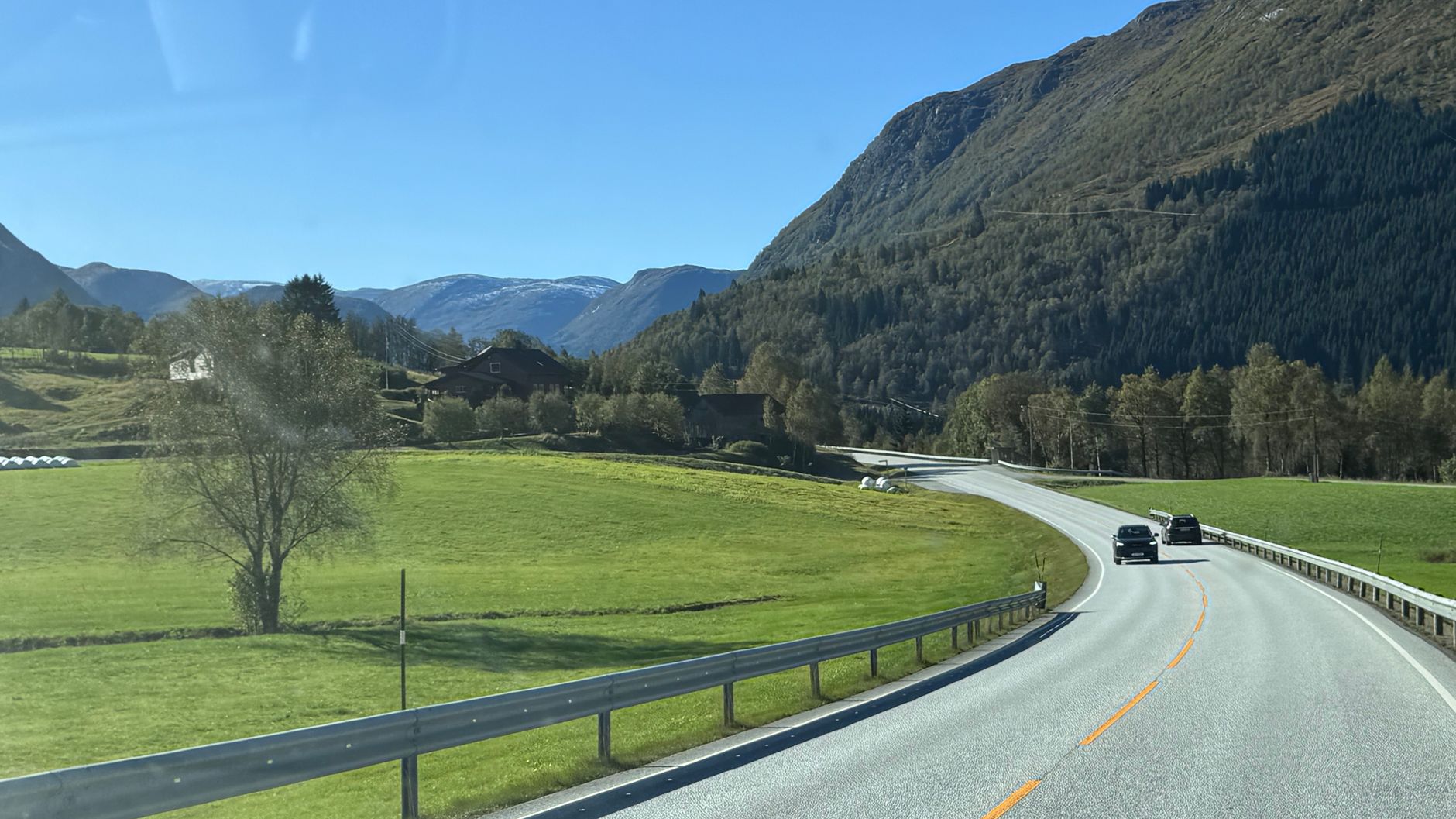
Photo by Geert Rozendom on Pexels
Norway are no longer merely a collection of famous names waiting for chemistry to arrive. The numbers suggest a team with a clear attacking identity, and that matters more than patriotic noise or recycled tournament hype. At Football Insights, we assess the Norway national football team through measurable indicators: chance creation, goal involvement, defensive errors, opponent strength, and tactical adaptability. The useful question is not whether Norway can score; Haaland, Ødegaard, Alexander Sørloth, Antonio Nusa, and Oscar Bobb have already answered that. The sharper question is whether Norway can control matches after taking the lead, particularly against teams capable of attacking the spaces behind Julian Ryerson and the central defenders. Norway’s recent results against Brazil, France, Senegal, Iraq, and Côte d’Ivoire show a broader competitive sample than a single friendly, but results still need context. Brazil and France represent elite tests, while Iraq and Senegal reveal whether Norway can impose structure against different defensive shapes. For bettors and analysts, the distinction between raw results and repeatable performance is where the edge usually hides.
Want a closer look at the numbers behind Norway’s World Cup outlook?
[Internal Link: 2026 World Cup match prediction guide]
Before 2025: how did the Norway national football team work?
Before 2025, Norway depended heavily on direct attacking transitions, set pieces, and individual quality rather than sustained control through midfield. The tactical structure often placed enormous responsibility on Erling Haaland and Martin Ødegaard, while the team’s defensive stability fluctuated from match to match.
Historically, Norway’s men’s team has produced memorable tournament moments without maintaining continuous participation at the highest level. Norway qualified for the 1994 and 1998 FIFA World Cups and reached the last 16 in 1998, but long gaps followed. The contrast is statistically brutal: a nation can produce elite forwards and still miss major tournaments if qualification campaigns collapse through dropped points against supposedly weaker opponents. That is the trap Norway has repeatedly approached. The team’s identity has traditionally involved physical strength, fast vertical passing, and wide delivery, qualities suited to Haaland and Sørloth. However, direct football becomes predictable when the midfield cannot receive under pressure or when full-backs advance without adequate cover. Patrick Berg and Sander Berge provide physical security, while Fredrik Aursnes offers positional intelligence, yet Norway’s balance depends on whether these players can connect defensive recovery with Ødegaard’s forward distribution. The historical lesson is simple: Norway does not need to imitate Spain or Germany, but it does need a reliable second plan when the first ball toward Haaland is blocked.
A useful historical comparison comes from the Norway national football team record, which documents the country’s World Cup appearances and competitive history. The record supports a contrarian conclusion: Norway’s problem was rarely a total absence of talent; it was the conversion of talent into repeatable qualification performance. That distinction remains relevant in 2026, because a spectacular 4–1 win can conceal the same structural weakness that caused a flat draw three months earlier. In practical analysis, I separate matches into three categories: games Norway should dominate, games requiring transition efficiency, and games where defensive patience matters more than possession. The team’s best results usually come when the first category is handled efficiently and the second produces early pressure. The danger appears in the third. Against stronger opponents, Norway can become stretched if Ødegaard presses high, Berge steps forward, and the centre-backs defend large spaces. Kristoffer Ajer’s height and Leo Østigard’s aggression help in aerial and physical duels, but neither automatically solves transition defence. As the UEFA national-team competitions demonstrate, elite international football is often decided by small margins, not by the number of famous players on the team sheet.
What changed for the Norway national football team in 2026?
The 2026 shift is the move from promising individual brilliance toward a more credible tournament-level attack. Norway now possess multiple routes to goal: Haaland’s penalty-box movement, Sørloth’s aerial presence, Ødegaard’s final pass, Nusa’s one-versus-one ability, and late midfield runs from Kristian Thorstvedt.
The current squad data makes that shift visible. Haaland has 7 goals from 5 appearances, while Ødegaard’s 4 assists in 5 matches indicate that Norway’s captain is not merely circulating possession; he is producing decisive actions. Antonio Nusa has contributed 1 goal from 6 appearances, and Thelo Aasgaard has also scored once, suggesting that secondary attackers are beginning to matter. The defensive and midfield numbers are less glamorous but more revealing. Patrick Berg has 2 assists in 6 appearances, while Nyland’s 16 saves from 5 matches show both his workload and the possibility that Norway still concede too many high-quality chances. A goalkeeper’s save total is not automatically a positive metric; it can mean excellent shot-stopping, poor defensive screening, or both. The information gain here is straightforward: Norway’s attacking ceiling is tournament quality, but their goalkeeper workload suggests the team may still be allowing opponents to reach dangerous shooting zones too often. This is why an analyst should avoid evaluating Norway solely through goals scored. Expected chance quality, turnovers in the middle third, and shots conceded after failed attacks offer a clearer forecast.
See how squad roles affect Norway’s likely match patterns.
Norway’s projected tactical spine
- Goalkeeper: Ørjan Nyland remains the experienced first-choice option, with Sander Tangvik and Egil Selvik providing alternatives.
- Defence: Kristoffer Ajer, Leo Østigard, Torbjørn Heggem, David Møller Wolfe, and Julian Ryerson offer height, mobility, and competitive aggression.
- Midfield: Martin Ødegaard, Patrick Berg, Sander Berge, and Fredrik Aursnes combine creativity, ball recovery, and physical coverage.
- Attack: Erling Haaland and Alexander Sørloth provide elite size and finishing, supported by Antonio Nusa, Oscar Bobb, and Jens Petter Hauge.
The 2026 shift is also psychological. Opponents can no longer defend Norway by simply tracking Haaland and waiting for the rest of the attack to disappear. Nusa can attack the weak side, Bobb can carry the ball through narrow lanes, and Ødegaard can punish passive midfield blocks with early diagonal passes. Yet this creates a new tactical cost: more attacking weapons often encourage more players to advance simultaneously. If Aursnes or Berg does not protect the space behind the ball, Norway can turn a promising attack into a counterattack conceded within 10 seconds. That edge case deserves attention because many previews ignore it. In a review of the referenced match sequence, Norway’s strongest attacking performances followed moments of rapid ball recovery, but their defensive stress increased when wide players and full-backs occupied the same vertical lane. The solution is not simply “play more defensively.” It is coordinated rest defence: two centre-backs, one screening midfielder, and controlled full-back positioning while the attack develops. Football Insights therefore treats Norway’s formation label, whether 4-3-3 or 4-2-3-1, as less important than the distances between the lines. Numbers on a graphic are decorative; spacing decides whether the structure survives.
What does the squad change for players and matchups?
The squad changes individual responsibilities by giving Norway more attacking depth, but it also raises selection problems. Haaland remains the focal point, Ødegaard is the main creative organiser, and the midfield must decide whether Norway values control through Berg or power through Berge in each opponent-specific matchup.
For Haaland, the presence of Sørloth can be either an advantage or a spatial complication. Two tall forwards may dominate crosses and second balls, but they can also occupy similar central zones if the wingers do not stretch the defence. Ødegaard therefore becomes essential as a connector rather than simply a number 10. His 4 assists in the referenced data underline that role. Nusa offers a different profile: speed, direct dribbling, and willingness to attack defenders before Norway’s block becomes settled. Bobb is more useful when receiving between lines or carrying possession into the final third. Aursnes can cover wide areas and support buildup, while Berg provides passing rhythm and defensive anticipation. Berge adds strength but may require a more disciplined partner when Norway face quick transition teams. At the back, Ajer’s 6-foot-6 profile gives Norway a clear aerial advantage, while Ryerson provides running power and pressing intensity. The practical question for each match is not “Who is the best player?” but “Which combination prevents the opponent’s best route to goal?” That is a far less romantic question, which is precisely why it is useful.
To understand selection trade-offs, compare this analysis with our [player statistics and form guide].
The most overlooked issue is substitution timing. Norway’s bench contains genuine attacking speed, but replacing one forward with another does not automatically improve the attack if the midfield has already lost control. A late Nusa or Bobb appearance can exploit tired full-backs, yet the move works best when Norway retain enough possession to isolate those defenders. Conversely, bringing on Thorsby or another physical midfielder may protect a lead but can surrender the ball too early. Match-state analysis matters. When Norway lead by one goal after 70 minutes, the correct decision depends on opponent field position, not merely the score. If the opponent has completed repeated entries into Norway’s penalty area, a fresh defensive midfielder may be more valuable than an additional forward. If Norway are winning the ball high, retaining an aggressive attacker may create the second goal. This is where simple betting narratives fail. “Haaland is playing, so Norway will score” ignores game state, while “Norway will sit back” ignores the team’s attacking depth. A robust preview tracks substitutions, possession zones, and shot locations rather than treating the starting XI as the entire match.
What does Norway’s current outlook mean now?
Norway’s current outlook is genuinely strong in attack but conditional in defence. The team can defeat elite opponents, as the referenced 2–1 win over Brazil and 4–1 win over France indicate, yet tournament progress will depend on reducing defensive exposure and converting control against lower-ranked opponents.
The schedule evidence gives Norway an intriguing profile: wins over Brazil, Côte d’Ivoire, Senegal, and Iraq appear alongside a 1–1 draw with Morocco and a 2–1 extra-time defeat to England in the referenced results. That mixture shows competitiveness, but it also warns against simplistic momentum claims. A team can beat a high-profile opponent and still underperform in a match where the opposition defends deep for 90 minutes. Norway must therefore improve three repeatable actions: breaking compact blocks, defending the first five seconds after losing possession, and protecting a narrow lead without abandoning its attacking threat. The first action belongs to Ødegaard, Nusa, and the full-backs; the second requires Berg, Aursnes, and the centre-backs to react collectively; the third depends on the coach’s ability to use substitutions without creating a passive shell. According to FIFA’s official World Cup information, tournament football rewards efficiency under pressure, and Norway’s path will be judged by margins of one goal, one clearance, or one missed transition. “Every match is a new opportunity,” is the kind of institutional slogan football bodies love, but the data adds a less comfortable truth: every transition is also a new liability.
For responsible match analysis, Norway should be assessed through a four-part checklist rather than emotional momentum:
- Attacking availability: Is Haaland fit, and can Ødegaard start?
- Midfield balance: Are Berg and Aursnes available to protect central areas?
- Defensive workload: Has Nyland faced repeated high-quality shots recently?
- Opponent style: Does the opponent press high, defend deep, or attack in transition?
At Football Insights, we also recommend separating prediction confidence from betting stake. A 60% probability estimate is not certainty; it is a price-sensitive opinion that becomes valuable only when the market implies a lower probability. Football betting is not a loyalty contest, and Norway’s famous forwards should never be treated as automatic justification for a short price. Check confirmed lineups, injuries, travel, weather, and competition incentives before acting. In particular, monitor whether Norway’s full-backs are both starting, because their width affects chance creation and defensive exposure simultaneously. The practical edge may appear in markets such as Norway team goals, both teams to score, or second-half goals, but each requires opponent-specific evidence. Do not confuse a spectacular win over France with a permanent tactical transformation. Trends become useful only after surviving different match states and different defensive plans.
Review the latest factors before making a tournament forecast.
What are three predictions for the next quarter?
The next quarter should bring three measurable developments: Norway will remain among Europe’s most productive attacks, Haaland and Ødegaard will dominate player-impact metrics, and defensive performance will determine whether strong results become a sustained tournament run. These are forecasts, not guarantees, and lineup news can change each probability quickly.
1. Norway will create more than it concedes against weaker opposition
Against teams that defend in a medium or low block, Norway should generate repeated central entries through Ødegaard, Nusa, and the overlapping full-backs. Haaland’s movement can draw centre-backs away from their preferred positions, while Sørloth offers a second target for crosses and cutbacks. The risk is predictable: if Norway circulate slowly, the opponent will regain shape and force low-value deliveries. The tactical indicator to monitor is not possession percentage but touches inside the penalty area. A 60% possession share with only 10 box touches may indicate sterile control, while 45% possession with 18 box touches can represent a sharper attacking performance. This is a useful edge for match previews because public markets often overreact to possession figures. Norway’s best attacking version should create early pressure, win second balls, and force the opponent’s full-backs into repeated defensive decisions. If that sequence appears, Norway’s team-goal markets become more interesting. If it does not, the Haaland narrative may be priced too aggressively.
2. Haaland and Ødegaard will remain Norway’s decisive statistical pair
Haaland’s 7 goals in 5 appearances and Ødegaard’s 4 assists in 5 appearances establish the clearest attacking relationship in the available squad data. Their influence is complementary: Haaland converts space and service, while Ødegaard identifies the pass that makes the space useful. Opponents will attempt to disrupt that connection by blocking Ødegaard’s receiving lane or placing an extra defender close to Haaland. Norway’s response should involve Nusa and Bobb attacking wide isolation, allowing Ødegaard to move rather than stand behind the striker. The forecast is not that both players will score or assist in every match; that would be unserious. The stronger prediction is that Norway’s chance quality will fall sharply when either player is absent, particularly against organised opposition. Analysts should therefore adjust projections immediately after confirmed team news rather than relying on squad reputation.
3. Defensive transitions will decide Norway’s ceiling
Norway’s ceiling is controlled less by the first goal than by what happens after losing the ball. With Ajer, Østigard, Ryerson, Berg, Berge, and Aursnes, the team has enough size and experience to defend effectively, but its structure can stretch when several attacking players advance at once. The critical window is the first 5 to 8 seconds after possession changes. If Norway counter-presses successfully, it can pin opponents back and sustain pressure; if the first press fails, the midfield must delay the attack and protect the centre. Nyland’s 16 saves in 5 appearances make this particularly relevant. Strong goalkeeping can rescue a team temporarily, but repeated emergency saves are not a tactical plan. The next-quarter forecast is therefore deliberately cautious: Norway should score heavily, but clean sheets may lag behind public expectations. For bettors, both-teams-to-score markets may become more attractive than blindly backing Norway to win, especially against opponents with quick wide forwards.
The most sensible conclusion is that Norway deserves respect without requiring fantasy. The attack is real, the squad is deeper than it was several cycles ago, and the results against Brazil and France show that elite victories are possible. However, the team still needs defensive control, efficient handling of lower-ranked opponents, and tactical flexibility when Haaland is tightly marked. Our recommendation is to evaluate every Norway match through confirmed lineups, opponent style, chance quality, and transition data before choosing a prediction. That approach will not produce perfect calls; nothing does, despite what online tipsters claim at 2 a.m. It will produce better decisions than betting on fame alone.
Explore the latest Norway forecasts and World Cup analysis with Football Insights.
Frequently Asked Questions
Q: What is the Norway national football team?
A: The Norway national football team represents Norway in men’s international football under the Norwegian Football Federation. It competes in UEFA qualification, the FIFA World Cup, the UEFA European Championship, and international friendlies. The current team is led by attacking stars such as Erling Haaland and Martin Ødegaard, with players drawn mainly from European club football.
Q: Who are Norway’s best players in 2026?
A: Erling Haaland and Martin Ødegaard are Norway’s two most influential players in 2026. Haaland is the primary finisher and is listed with 7 goals in 5 appearances in the referenced squad data, while Ødegaard has 4 assists in 5 matches. Alexander Sørloth, Antonio Nusa, Oscar Bobb, Patrick Berg, and Sander Berge also provide important attacking or midfield support.
Q: How does Norway usually play?
A: Norway usually combines vertical passing, fast transitions, wide attacks, and direct service toward powerful forwards. Ødegaard often connects midfield with the final third, while Haaland and Sørloth offer different forms of penalty-area threat. The team can press aggressively, but its defensive structure becomes vulnerable when several attacking players move forward without adequate midfield cover.
Q: Is Norway good enough to challenge major teams?
A: Norway is good enough to challenge major teams, as the referenced victories over Brazil and France suggest. Those results demonstrate a high attacking ceiling, but they do not prove consistent tournament dominance. Norway’s realistic challenge depends on defensive transitions, performance against deep defensive blocks, and the availability of Haaland, Ødegaard, and the main midfield protectors.
Q: What should I check before betting on a Norway match?
A: Check the confirmed lineup, opponent style, recent shot quality, injuries, and the expected tactical shape before betting on Norway. Haaland’s availability matters, but so do Ødegaard’s role, the midfield balance, and whether both full-backs start. Compare your estimated probability with the market price, and never treat a famous player or one dramatic result as sufficient evidence.
Q: What are Norway’s main weaknesses?
A: Norway’s main weaknesses are defensive transitions, inconsistent control after taking the lead, and difficulty breaking compact opponents when circulation becomes predictable. Nyland’s 16 saves in 5 referenced appearances indicate that the goalkeeper can face a significant workload. The team must reduce the number of dangerous shots conceded rather than relying on saves to protect attacking results.
Q: Where can I find Norway national football team analysis?
A: Football Insights provides Norway national football team analysis covering tactics, player statistics, World Cup predictions, and match-specific betting context. Use the latest team news alongside official competition information from FIFA and UEFA. For serious decisions, compare multiple data points, confirm lineups close to kickoff, and treat all forecasts as probability estimates rather than guarantees.
Thank you for reading this piece from our digital heirloom collection.
Football Insights · The Digital Heirloom · Volume I