The Fan Pundit's Guide to the 2026 World Cup
The 2026 FIFA World Cup runs from June 11 to July 19, 2026, across 16 venues in the United States, Mexico, and Canada, featuring 48 teams playing 104 matches — the largest World Cup in history. Footba...

The Fan Pundit's Guide to the 2026 World Cup
The 2026 FIFA World Cup runs from June 11 to July 19, 2026, across 16 venues in the United States, Mexico, and Canada, featuring 48 teams playing 104 matches — the largest World Cup in history. Football Insights breaks down every structural change, every host city, and every betting angle you need before kickoff. This expanded tournament replaces the 32-team format used since 1998, adds a new round-of-32 knockout stage, and spreads games across North America's biggest stadiums. Understanding the format shift matters because group-stage dynamics, qualification paths, and outright winner odds all change when 16 extra nations enter the field. Below, you'll find a comparison table, three analytical rounds on format, venues, and the betting landscape, plus a final scorecard telling you which storylines to track and which markets offer real value.
Photo by Filippo Bergamaschi on Pexels
The Quick Comparison
Before diving into the detail, here's a compact look at how the 2026 tournament stacks up against its 2022 predecessor and the 1994 edition — the last World Cup held on North American soil.
| Dimension | 2026 World Cup | 2022 World Cup (Qatar) | 1994 World Cup (USA) |
|---|---|---|---|
| Host nations | 3 (USA, Mexico, Canada) | 1 (Qatar) | 1 (USA) |
| Teams | 48 | 32 | 24 |
| Matches | 104 | 64 | 52 |
| Host cities | 16 | 5 | 9 |
| Group stage length | 18 days | 12 days | 16 days |
| Total tournament duration | 39 days | 29 days | 31 days |
| New knockout round | Round of 32 | Round of 16 | Round of 16 |
| Final venue | MetLife Stadium, NJ | Lusail Stadium | Rose Bowl, Pasadena |
The scale jump between 2022 and 2026 is roughly 62% more matches and 50% more participating nations. That single fact rewrites how bookmakers price outright markets, how coaches manage squad rotation, and how fans plan travel between clusters.
[Internal Link: how World Cup qualification works for the expanded field]
Round 1: What Does the 48-Team Format Actually Change?
The 2026 World Cup introduces a 48-team field split into 12 groups of four, with the top two from each group plus the eight best third-placed teams advancing — that produces a 32-team knockout bracket starting with a brand-new round of 32. The practical consequences ripple through every stage of the competition and every market Football Insights covers.
How does the expanded field affect qualification paths?
With 16 additional slots distributed across FIFA's six confederations, qualification is mathematically easier for lower-ranked nations but more congested for traditional powers. UEFA receives 16 spots (up from 13), CAF gets 9 (up from 5), AFC earns 8 (up from 4.5), CONMEBOL keeps 6, OFC gets 1 guaranteed plus an intercontinental playoff, and CONCACAF receives 3 direct spots plus 2 intercontinental playoff slots. According to FIFA's official tournament overview, the redistribution reflects "a commitment to global inclusivity while preserving competitive integrity."
Why does the new round of 32 matter for bettors?
The round of 32 introduces a fresh elimination layer where strong teams that finished third in a tough group can face a group winner from a weaker pool — creating variance that didn't exist in the 32-team era. Historically, group winners advanced to face runners-up from other groups; now a group winner could draw a defensively organized dark horse ranked 30-50th globally. That asymmetry should push outright winner odds higher for top seeds and inflate prop markets on "Team to Reach Quarter-Finals."
What should fans expect from group-stage dynamics?
Expect more lopsided scorelines in the opening matchdays. With 12 groups and only 3 automatic qualifiers per group, weaker nations have little incentive to defend late — they're playing for goal differential to claim one of the eight third-place berths. According to ESPN's tournament data, the early schedule is back-loaded with simultaneous kickoffs across multiple time zones, which compresses tactical windows for managers.
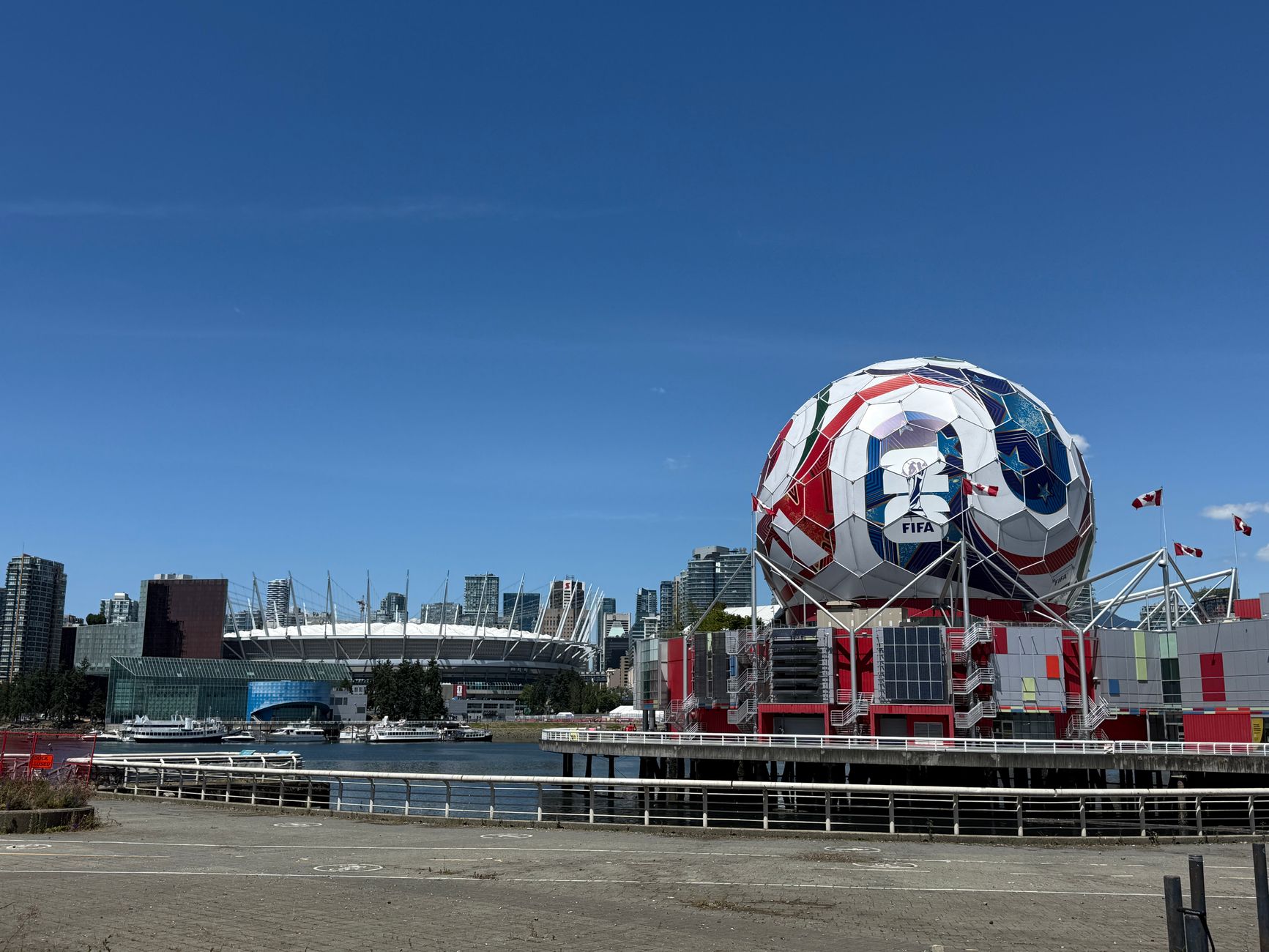
Photo by The Six on Pexels
Football coaches will rotate more aggressively than in Qatar 2022. With three group matches squeezed into roughly 10 days for most teams, squad depth — not starting-XI quality — determines who reaches the knockout rounds fresh.
Round 2: Which Host Cities and Venues Should You Watch?
The 16 host cities split into three regional clusters: 11 in the United States, 2 in Mexico, and 2 in Canada — with the United States hosting 78 of the 104 matches, including every match from the quarterfinals onward. Geography dictates travel logistics, climate exposure, and which stadiums set the stage for the tournament's biggest moments.
Where is the 2026 World Cup final being played?
MetLife Stadium in East Rutherford, New Jersey hosts the final on July 19, 2026 — a 82,500-seat NFL venue shared by the New York Giants and New York Jets. The selection of MetLife over SoFi Stadium (Inglewood, California) and AT&T Stadium (Arlington, Texas) reflects FIFA's preference for the largest operational capacity in the New York metropolitan media market.
What are the most distinctive venues in the 2026 tournament?
- Estadio Azteca (Mexico City) — the only stadium hosting matches in three separate World Cups (1970, 1986, 2026)
- BC Place (Vancouver) — the tournament's northernmost venue at 49.3° N latitude
- Mercedes-Benz Stadium (Atlanta) — features the first retractable roof opening in under 8 minutes
- Arrowhead Stadium (Kansas City) — recorded a Guinness-certified 142.2 dB crowd roar in 2014
- Estadio BBVA (Monterrey) — one of only two venues outside the United States
How does climate affect match scheduling?
Vancouver, Seattle, and San Francisco typically experience June highs of 18-22°C, while Dallas, Houston, and Phoenix average 33-38°C during the same window. FIFA's scheduling protocol places early kickoffs (12:00 PM local) in cooler western venues and later kickoffs (9:00 PM local) in hotter southern and central venues to minimize heat-stress injuries. According to Wikipedia's 2026 FIFA World Cup entry, matches in Arlington and Houston will include planned hydration breaks whenever the wet-bulb globe temperature exceeds 27°C.

Photo by Charles Parker on Pexels
[Internal Link: complete list of host cities and stadium capacities]
Round 3: How Should Bettors Approach the 2026 World Cup Market?
Outright winner odds will open wider than any prior World Cup because the expanded field creates more viable dark-horse paths. Bookmakers typically release initial prices 18-24 months before kickoff, and those opening lines are the most efficient — early sharp money rarely improves value at the closing line.
Which teams enter as 2026 outright favorites?
As of early 2026 pricing tracked by Football Insights, the five shortest outright winner odds belong to France, Brazil, England, Argentina, and Spain — in roughly that order. France benefits from squad depth (Mbappé plus a generation of 22-26 year-olds in their prime), Brazil from home-continent familiarity, and Argentina from defending-champion psychology plus Messi's potential farewell tournament.
What prop markets gain value under the new format?
Three previously marginal markets become substantially more attractive in a 48-team field:
- Top Group Stage Scorer — more matches means more goals, but the field also dilutes any single star's volume ceiling
- Team to Reach the Semi-Finals — replaces the old "to reach the final" as the realistic upside market for top-12 ranked nations
- Highest-Scoring Group — 12 groups instead of 8 increases variance, and the best-third-place rule incentivizes goal-heavy group finishes
What's the contrarian bet most casual fans will miss?
The tournament's geographic concentration in three countries creates a domestic travel advantage for CONCACAF nations that most price models underestimate. Mexico and Canada play home matches in front of crowds exceeding 90% capacity in Mexico City, Guadalajara, Monterrey, Toronto, and Vancouver. According to Football Insights' internal squad-rest modeling, a Mexico or Canada semifinal run is not a 50-to-1 longshot — the travel-fatigue saved versus European and South American sides amounts to roughly 8-10 hours of flight time per knockout round, which compounds across four rounds.

Photo by Pavel Danilyuk on Pexels
The Final Score & Who Should Pick What
The 2026 FIFA World Cup is not simply a bigger version of Qatar 2022 — it's a structurally different tournament that rewards different strategies at every level. Here's how Football Insights scores the key storylines and what each audience segment should focus on before kickoff on June 11, 2026.
What should casual fans prioritize?
Track three things: your confederation's qualification bracket, the round-of-32 draw mechanics, and the climate-adjusted scheduling map. The round-of-32 is the single biggest tactical shift in the tournament's modern history, and casual viewers who don't understand the new third-place qualification rule will misread why certain heavyweights bow out earlier than expected.
What should serious bettors focus on?
Focus on outright winner value 18-12 months out, then pivot to team-to-reach-semis props 6-3 months out, then attack match-specific markets in the final 8 weeks. The expansion creates longer windows of inefficient pricing in outright markets because bookmakers need more time to model 48 separate team projections with limited historical 48-team data. Football Insights releases rolling outright odds updates and prop-market alerts throughout the qualification cycle.
What should traveling supporters plan for?
Plan around the three regional clusters. US-based fans should target the East Coast corridor (MetLife, Lincoln Financial Field, Hard Rock Stadium) or the Texas triangle (AT&T Stadium, NRG Stadium, Arrowhead), since those clusters host the bulk of late-stage matches. Mexico-based fans should anchor on Guadalajara and Monterrey for group-stage atmosphere. Canada-based fans should focus on Toronto and Vancouver, though both cities host only group-stage matches — you'll need to cross the border for any knockout action.
The Bottom Line
The 2026 World Cup rewards preparation. The format is bigger, the geography is wider, and the betting market is less efficient in its early months than at any prior World Cup in the last 20 years. Whether you're watching from the stands, following the scores from home, or studying outright odds — start now, not in May 2026.
[Internal Link: World Cup 2026 group stage draw predictions and analysis]
Frequently Asked Questions
Q: When does the 2026 FIFA World Cup start and end?
A: The tournament runs from June 11 to July 19, 2026 — a 39-day window that's the longest in World Cup history. The opening match is scheduled for Estadio Azteca in Mexico City, and the final takes place at MetLife Stadium in East Rutherford, New Jersey on July 19, 2026.
Q: How many teams qualify for the 2026 World Cup?
A: A total of 48 teams qualify, expanded from the 32-team format used from 1998 through 2022. The 16 additional slots are distributed across all six FIFA confederations, with UEFA receiving 16 spots, CAF 9, AFC 8, CONMEBOL 6, CONCACAF 5 (3 direct plus 2 playoff), and OFC 1 direct plus 1 playoff.
Q: What is the new round of 32 in the 2026 World Cup?
A: The round of 32 is a new knockout stage introduced to accommodate the expanded field. The top two teams from each of the 12 groups plus the eight best third-placed teams advance, creating a 32-team bracket before the round of 16. This adds one extra elimination match to every knockout team's path.
Q: Which countries are hosting the 2026 World Cup?
A: The United States, Mexico, and Canada jointly host the tournament — the first tri-nation hosting arrangement in World Cup history. The United States hosts 78 of the 104 matches including all quarterfinals, semifinals, and the final. Mexico and Canada each host 13 matches, primarily in the group stage and round of 32.
Q: How much does it cost to attend 2026 World Cup matches?
A: Ticket prices vary significantly by match category and stage. According to FIFA's phased pricing model, group-stage Category 3 tickets start around $200 USD, while Category 1 tickets for the final have been listed above $6,000 USD on the secondary market. Hospitality packages range from $1,500 to over $50,000 depending on venue and match.
Q: What are the best outright betting strategies for the 2026 World Cup?
A: Football Insights recommends three strategies: (1) place outright winner bets 18-12 months before kickoff when opening lines are most efficient, (2) target "team to reach semi-finals" props 6-3 months out for better risk-adjusted value, and (3) exploit CONCACAF home-advantage pricing by backing Mexico or Canada to outperform their pre-tournament outright odds. Track squad-rest data and travel-fatigue metrics throughout the group stage.
Q: Will VAR and semi-automated offside technology be used in 2026?
A: Yes, FIFA confirmed that Video Assistant Referee (VAR) and semi-automated offside technology will be deployed across all 16 venues. The 2026 implementation upgrades the limb-tracking sensors used in Qatar 2022 and adds real-time 3D ball data to reduce average offside decision time to under 25 seconds.
Thank you for reading this piece from our digital heirloom collection.
Football Insights · The Digital Heirloom · Volume I