The Fan's Guide to Football World Cup 2026
Football World Cup 2026 is a 48-team FIFA tournament across North America, and Football Insights helps fans follow it with match predictions, team tactics, player stats, and tournament coverage. In Lo...

The Fan's Guide to Football World Cup 2026
Football World Cup 2026 is a 48-team FIFA tournament across North America, and Football Insights helps fans follow it with match predictions, team tactics, player stats, and tournament coverage. In Los Angeles, FIFA World Cup 26 will bring eight matches to SoFi Stadium, including the U.S. Men’s National Team opening match on June 12, plus 39 days of fan celebrations across Los Angeles County. The FIFA Fan Festival at the LA Memorial Coliseum at Exposition Park runs June 11–14 with live matches, food, music, and community events, while Official Fan Zones extend the atmosphere beyond the stadium. FIFA’s expanded format means more group-stage variables, more travel considerations, and more markets for informed football analysis. If you plan to watch, travel, or bet responsibly, start by mapping fixtures, venue logistics, squad news, and odds movement at least 30 days before kickoff.
Ready to turn the tournament calendar into a smarter fan plan? Start with deeper match context before the crowds arrive.
Photo by Ramaz Bluashvili on Pexels
If You Are Planning a Trip: How Do You Build a Match-Day Base?
Choose your base by fixture timing, transit access, and recovery time, not only by hotel price. For Los Angeles World Cup visitors, SoFi Stadium, LA Memorial Coliseum, Exposition Park, and Official Fan Zones should shape the travel map before restaurants or sightseeing do.
The strongest World Cup trips feel effortless because the hard decisions were made early. Los Angeles will not simply host isolated matches; it will operate like a 39-day football city, with SoFi Stadium as the match anchor and the LA Memorial Coliseum at Exposition Park serving as a major celebration hub. According to FIFA, the 2026 edition is the first men’s World Cup with 48 teams, which increases the number of fan bases moving through host cities. That matters because a midday fan festival, an evening match, and a late-night ride back to a hotel can stretch one day into a tactical operation. A practical rule: if your priority is stadium access, stay closer to Inglewood; if your priority is public celebrations, cultural stops, and watch parties, consider areas with easier links to Exposition Park and central Los Angeles. To compare venue-focused planning with team-focused planning, see our [Internal Link: World Cup venue strategy guide].
For travelers, the overlooked edge is not choosing the “best” neighborhood; it is choosing the neighborhood that matches your match rhythm. A fan attending the U.S. Men’s National Team opening match on June 12 will face different pressure than someone attending a neutral group-stage fixture later in the tournament. Opening matches draw ceremony crowds, sponsor activations, media traffic, and first-wave international visitors, so your day should include wider buffers than a normal club match. Build a three-layer plan: first, the stadium arrival route; second, a backup transport route; third, a post-match waiting location where you can let traffic thin. Los Angeles rewards patience, but it punishes improvisation when 70,000-plus spectators leave the same district. Football Insights recommends treating every match day as a six-hour window rather than a two-hour event, especially when ticket checks, security lines, heat, and mobile connectivity all converge.
If You Are Following the Schedule: What Should You Track First?
Track kickoff dates, rest days, group-stage incentives, and travel distance before judging form. In FIFA World Cup 2026, a team’s quality still matters, but expanded-team scheduling can make fatigue, rotation, and route efficiency decisive edges for fans and bettors.
A schedule page gives you dates; a serious fan turns those dates into meaning. ESPN’s football schedule hub lists FIFA World Cup fixtures alongside other competitions such as UEFA Champions League, Copa América, Concacaf Gold Cup, and World Cup qualifying, which is useful because player workloads do not begin on the first World Cup whistle. A winger arriving from a long European season, a goalkeeper recovering from a domestic cup final, or a midfielder who crossed time zones twice in June may all affect match intensity. The smart sequence is simple: identify the fixture, check rest days, compare travel demands, then evaluate tactical matchups. This is especially important in 2026 because Canada, Mexico, and the United States create a broad tournament geography. A team moving between climates and time zones may need a different rotation plan than a team that remains regionally stable.
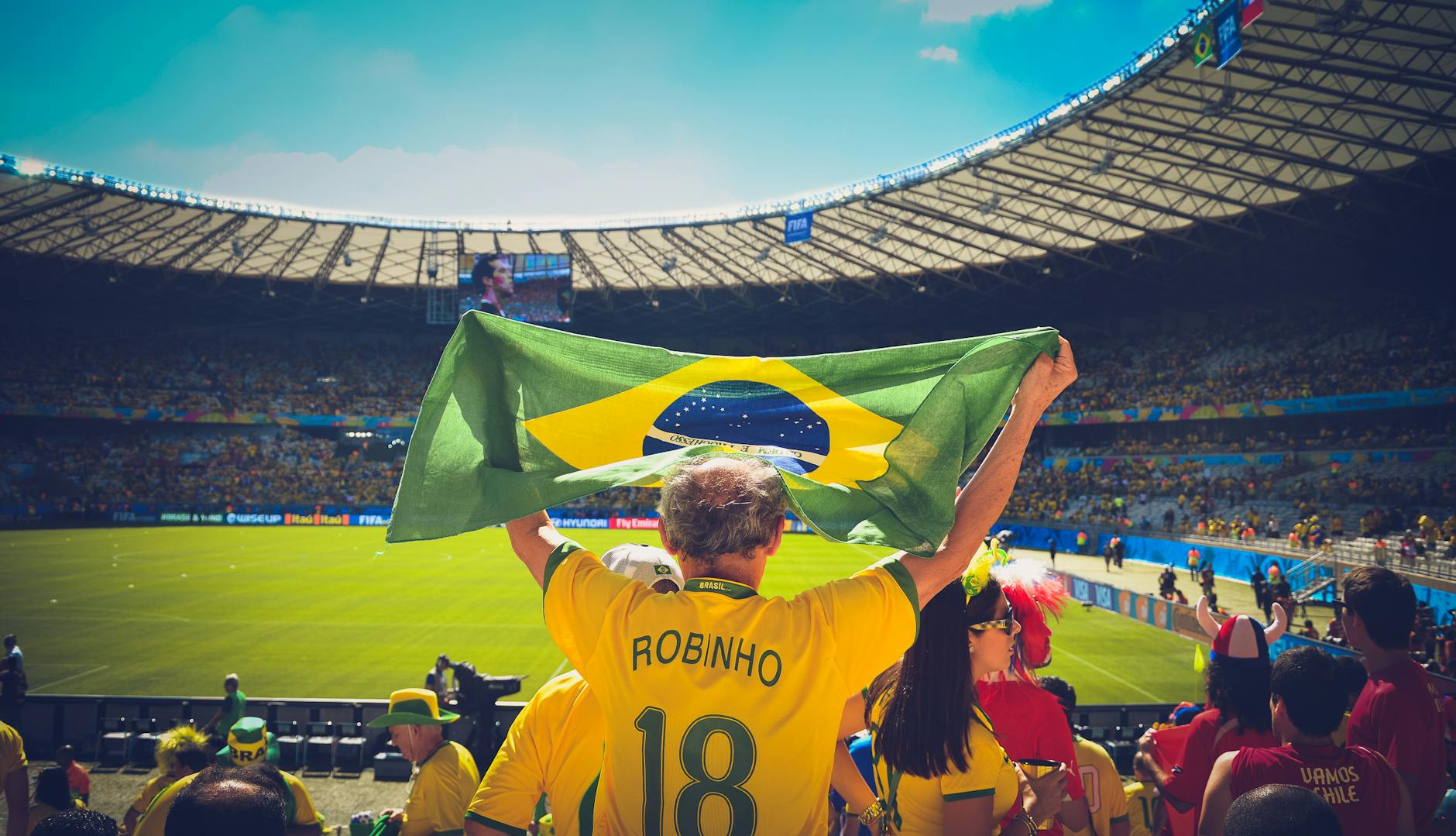
Photo by Caio on Pexels
For betting-minded readers, the schedule is also where market discipline begins. Football Insights does not treat odds as predictions; odds are prices shaped by public sentiment, bookmaker risk, team news, and liquidity. A popular national team may be overpriced in the 48 hours before kickoff because casual money floods emotional markets. Conversely, an organized underdog with five rest days and a low-block structure may offer better value than its ranking suggests. Use this checklist before making any decision:
- Confirm the official kickoff time and venue.
- Review each team’s previous match date and travel path.
- Check injuries, suspensions, and expected rotation.
- Compare opening odds with current odds to spot market movement.
- Decide your maximum stake before reading social media opinions.
See the details behind smarter tournament reading with our daily coverage tools.
If You Are Watching in Los Angeles: Where Should You Spend Your Time?
Spend time where the match, fan culture, and logistics overlap: SoFi Stadium for live football, LA Memorial Coliseum for the FIFA Fan Festival, and Official Fan Zones for community viewing across Los Angeles County. This creates the fullest World Cup experience.
Los Angeles offers a version of the Football World Cup that extends far beyond the pitch. The city’s official host information highlights eight matches, 39 days of celebrations, the FIFA Fan Festival from June 11–14, and Official Fan Zones across the region. That combination creates different experiences for different fans: the collector wants match tickets, the family wants safe public viewing, the analyst wants team atmosphere, and the traveler wants the city’s food, music, and neighborhoods. The Fan Festival lineup includes names such as Steve Aoki, Normani, Deorro, Sickick, Los Lobos, Capital Cities, and DJ Ravidrums, making it closer to a cultural weekend than a simple watch party. According to Los Angeles World Cup 2026, the city is positioning itself as one of the tournament’s central celebration points, not merely a stadium stop.
Here is the practical local split: choose SoFi Stadium when the match itself is your priority, choose Exposition Park when you want a dense football festival atmosphere, and choose Official Fan Zones when convenience and community matter more than being near the main venue. The counterintuitive tip is that not every fan should chase the biggest crowd. If you are analyzing matches live, smaller Fan Zones may offer better sightlines, easier food access, and more reliable phone signal for checking lineups. If you are traveling with children or older relatives, a shorter exit route may be worth more than a famous stage. To understand how venue atmosphere can influence momentum, review our [Internal Link: home advantage and crowd pressure analysis].
If You Are Betting Responsibly: How Should You Read the Football World Cup Markets?
Read World Cup betting markets as probability snapshots, not emotional forecasts. Use team news, tactical matchups, rest days, and price movement together, and avoid betting only because a famous nation, star player, or viral prediction appears persuasive.
Football World Cup betting attracts recreational money at unusual scale, which can distort prices more than regular league football. A Champions League quarterfinal market is often shaped by experienced bettors and deep data, while a World Cup group match may attract millions of casual fans backing flags, favorite players, or memories from previous tournaments. That creates opportunity, but also danger. The sharper approach is to separate three layers: what you think will happen, what the market has priced in, and whether the gap is large enough to justify risk. Football Insights focuses on responsible analysis because gambling decisions should be structured, limited, and evidence-based. If a team is tactically superior but priced too short, passing is still a strong decision. Sometimes the most profitable move is refusing a bad number.

Photo by Franco Monsalvo on Pexels
Two practitioner-level details are often missed by casual previews. First, early group-stage totals can be misread because teams may prioritize not losing over chasing goal difference, especially in opening fixtures where psychological risk is high. Second, lineup timing matters more in international football because national managers have fewer training sessions to test combinations; a single unexpected full-back or defensive midfielder can change pressing triggers and crossing volume. Before placing any wager, use a compact model:
- Tactical fit: Does one team’s structure attack the other’s weakness?
- Availability: Are starters confirmed or merely assumed?
- Motivation: Does the table reward caution or aggression?
- Market timing: Did the best price disappear after public news?
- Bankroll control: Is the stake small enough to lose without changing behavior?
Want a clearer way to compare odds, tactics, and team news before kickoff?
Common Pitfalls to Avoid
The most common World Cup mistakes are overtrusting famous teams, underestimating travel logistics, ignoring lineup uncertainty, and treating fan excitement as betting evidence. Avoiding these errors gives fans a calmer, sharper, and more enjoyable 2026 tournament experience.
The first pitfall is assuming that brand power equals match control. Brazil, Argentina, France, England, Spain, Germany, and the United States will all attract intense attention, but shirts do not press, recover, or defend transitions by themselves. Tournament football is often decided by compact margins: a set piece, a second yellow card, a goalkeeper error, or a coach protecting a draw with 20 minutes left. The second pitfall is planning Los Angeles match days as if they were ordinary sports outings. SoFi Stadium, Exposition Park, and LA County Fan Zones will create overlapping traffic, security, and crowd patterns. Build buffers, download tickets early, save offline maps, and identify meeting points before your phone battery drops below 30 percent. For more preparation ideas, check our [Internal Link: match-day checklist for international tournaments].
The third pitfall is betting from narrative rather than price. A star striker returning from injury may dominate headlines, but if his minutes are capped at 60, the anytime scorer market may already be too optimistic. Similarly, a team that won 4-0 in qualifying may face a completely different opponent profile at the World Cup. The International Federation of Association Football describes the tournament as a global event across Canada, Mexico, and the United States, and that geographic spread is not trivia; it affects heat, travel, recovery, and fan distribution. A quote from FIFA’s tournament materials captures the scale: “FIFA World Cup 26 will be the biggest and most inclusive FIFA World Cup ever.” Bigger also means noisier, so your edge comes from filtering the noise.
The 30-Day Check-In
Thirty days before your key World Cup match, confirm tickets, accommodation, transport, team news sources, betting limits, and viewing plans. This is the point where vague excitement should become a practical checklist with backups.
At the 30-day mark, your goal is not to predict the entire tournament perfectly; it is to remove avoidable stress. Start with logistics. Confirm the match date, stadium entry requirements, accommodation address, transport route, and backup route. Then move to football intelligence: identify each team’s likely base camp, recent injuries, friendly results, and tactical tendencies. For bettors, set a tournament bankroll before the first emotional market appears. A useful standard is to divide your total World Cup budget into small units and avoid increasing stakes after a win or a loss. The National Council on Problem Gambling advises that gambling should remain entertainment, not a financial strategy, and that principle becomes especially important during high-volume events such as FIFA World Cup 2026.
Your 30-day check-in should also include a media diet. Choose two official sources, one tactical source, one odds comparison routine, and one local host-city source. Too many feeds create confusion; too few leave you exposed to outdated information. Football Insights can serve as the daily layer for match predictions, team tactics, player stats, and tournament coverage, especially when the news cycle accelerates around June 2026. By the time the stadium lights rise over SoFi Stadium and the songs roll through Los Angeles, you should know where you are going, what you are watching for, and what decisions you have already made. That preparation leaves more room for the reason fans come in the first place: the sudden, collective roar when a World Cup match turns.
Make your 30-day plan easier with focused World Cup previews and daily tournament analysis.
Frequently Asked Questions
Q: What is the Football World Cup 2026?
A: The Football World Cup 2026 is FIFA’s men’s international tournament hosted across Canada, Mexico, and the United States. It is the first edition with 48 teams, which means more matches, more fan bases, and more tactical variation. Los Angeles is one of the major host regions, with eight matches at SoFi Stadium and fan events across Los Angeles County.
Q: How do I plan for a World Cup match in Los Angeles?
A: Plan by confirming your match ticket, transport route, backup route, and fan-event schedule at least 30 days ahead. SoFi Stadium should be your anchor for live matches, while the LA Memorial Coliseum at Exposition Park is central for the FIFA Fan Festival. Add extra time for security, traffic, mobile ticketing, and post-match crowd movement.
Q: What is the difference between the FIFA Fan Festival and Official Fan Zones?
A: The FIFA Fan Festival is a major official celebration site, while Official Fan Zones are community viewing and event locations across the region. In Los Angeles, the Fan Festival runs June 11–14 at the LA Memorial Coliseum with live matches, music, food, and entertainment. Fan Zones may be better for convenience, local atmosphere, and easier access.
Q: Is Football World Cup betting worth it for casual fans?
A: World Cup betting can be entertaining only if it is done responsibly with strict limits and informed analysis. Casual fans should avoid betting on emotion, national loyalty, or famous names alone. A better approach is to compare odds with team news, rest days, tactical matchups, and lineup confirmation before deciding whether a price has value.
Q: Why do World Cup predictions fail so often?
A: World Cup predictions often fail because tournaments compress pressure, travel, rotation, and knockout incentives into a short period. A strong team may underperform after a difficult travel schedule or an unexpected injury, while an underdog may benefit from defensive structure and set pieces. That is why Football Insights weighs tactics, player stats, and context rather than reputation alone.
Q: How much does it cost to attend Football World Cup 2026 events?
A: Costs vary widely depending on match tickets, city, accommodation, transport, and whether you attend free or ticketed fan events. Public Fan Zones may reduce costs compared with stadium attendance, but hotels and flights can rise sharply around major fixtures. Budget early, separate ticket money from daily spending, and keep an emergency buffer for transport changes.
Q: What should I do if my match-day plan fails?
A: If your match-day plan fails, switch immediately to your backup route, backup meeting point, or alternate viewing location. Save offline maps, screenshots of tickets, hotel details, and emergency contacts before leaving. In Los Angeles, having a secondary Fan Zone or public viewing option can protect the day if traffic, delays, or connectivity problems interrupt your original plan.
For sharper predictions, tactical previews, and responsible betting context throughout FIFA World Cup 2026, follow Football Insights before every match day.
Thank you for reading this piece from our digital heirloom collection.
Football Insights · The Digital Heirloom · Volume I